


Vertical dramas may still be in development at most U.K. broadcasters, but Welsh PSB S4C is already underway on its second undertaking, the 60-part series Signal for its youth-skewing TikTok channel, Hansh.
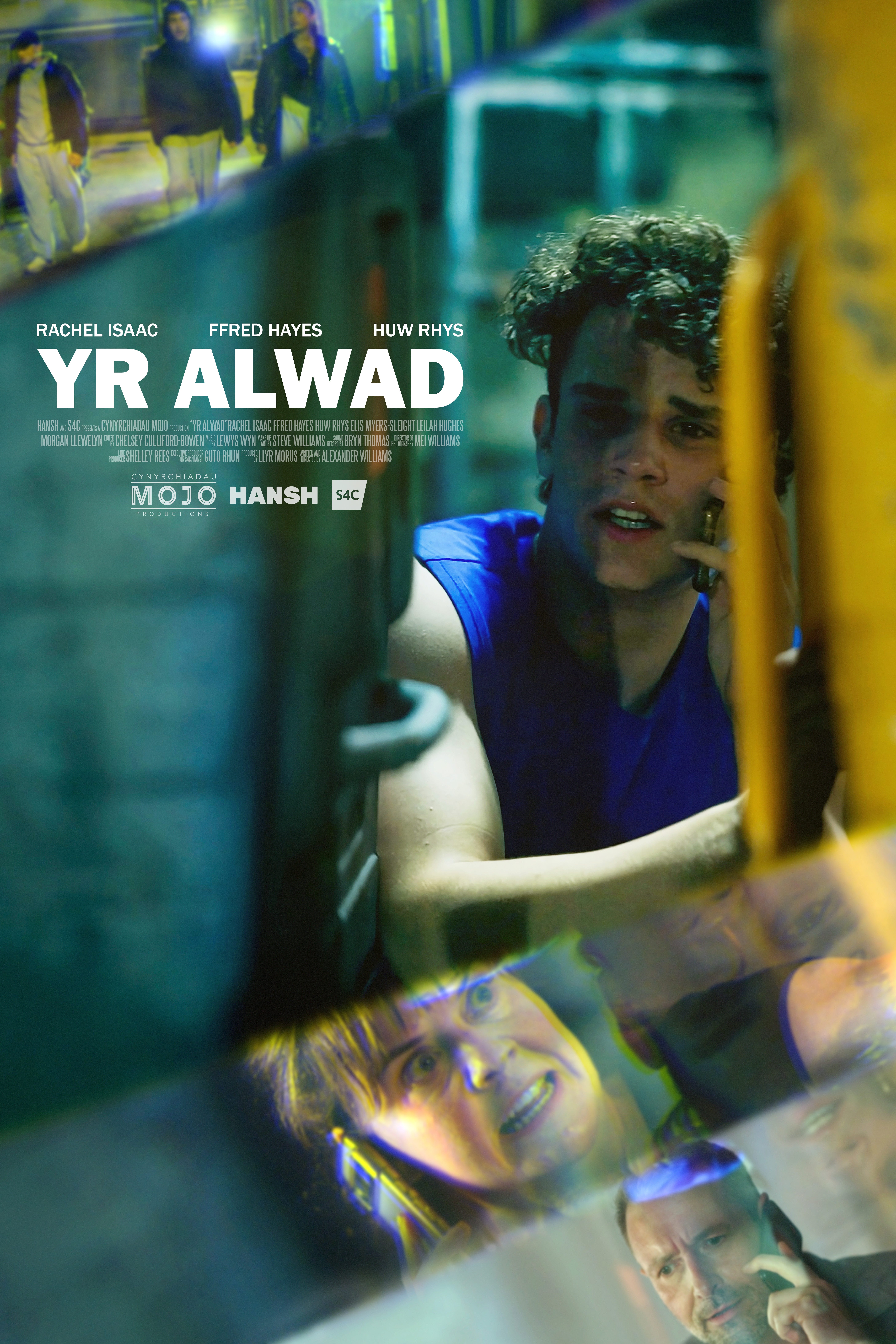
Welsh indie Mojo Productions’ seven-part vertical drama Yr Alwad (Calls) for S4C broke ground in 2025 as the first vertical offering for a PSB. The TikTok-first series, which was nominated in the best short-form scripted category at July’s Broadcast Digital Awards, follows a series of phone calls between a mother and her son, who is targeted in a homophobic attack during a night out.
Its success spurred S4C’s young audiences commissioner Guto Rhun to go even bigger for a sophomore effort, which he envisioned as a 60-part romantic drama. “Guto and I carried on chatting, and he was like, ‘We’ve seen now that we can make them. They’re popular. There’s an audience for them. So, let’s go all out and do a long-running series,’” says Llyr Morus, director of Mojo.
While the U.K.’s production sector acknowledges the potential of vertical dramas, there are also some industry murmurs that they’re not necessarily compatible with the country’s scripted traditions. However, new stats from Singapore-based consultancy Media Partners Asia (MPA) underline how much money could be left on the table if the sector sleeps on the format.
MPA estimates that the vertical drama market outside China is worth $3.6 billion in 2026. This figure is expected to triple to $9.5 billion by 2031. Meanwhile, in that same time period, the U.S. market will climb from $1.5 billion to $3.7 billion. Eye-watering costs of acquisition (namely the marketing costs required to draw users) have traditionally hamstrung vertical content apps from making money. However, with leading app ReelShort expected to post a $40 million net profit this year for the first time, there are hopes the market is on more sustainable footing.
“The ever-growing popularity of vertical dramas is not going to be the death of long form,” says Morus, who has been filming Signal during Wales’ major arts festival, Eisteddfod. “They will develop and sit next to each other because there’s an audience for both, and one drives people to the other. It’s progress.”
This week, Indie Hustle caught up with the producer to discuss the opportunities in vertical drama for writers’ rooms and crews, and why they can help small indies to get their foot in the door in the digital world.
Read on to find out:
Why PSBs can elevate the quality of vertical storytelling
The per-minute budget for a 60-part series, and why smaller teams are a must
Why every episode “needs to be a rollercoaster” to maintain interest
The brief on every episode for the five-person writing team
How digital commissions can let smaller companies come up

Why PSBs should experiment with vertical stories
The recurring CEO and secret millionaire tropes in vertical dramas, which are corny at best and misogynistic at worst, can give these shows a bad rep. But the advantage of PSBs engaging with the format is that, unlike a commercial app that needs a return on every story, monetisation isn’t a priority. As such, like Calls before it, Signal doesn’t have a “gamify” strategy behind the storytelling, and in turn, gets to stay far away from the tell-tale tropes.
“What we’ve been looking at are the viewing habits and structure of vertical dramas, rather than the content, so that it is a totally original story for us, and we’re not going down a rabbit hole of copying anything else,” says Morus.
The producer has researched the vertical trends out there, but insists the indie is “forging [its] own path” and putting a premium on storytelling.
“With a PSB, you feel people are more open to criticising the show, so there’s more scrutiny,” says the producer. “We’re striving for every episode, every character, every story beat to be the best that it can be, and not to let that be driven by any monetary discussion.”
The benefits of PSBs working in vertical formats, he says, is that this content can go out free to air, “and you’re not asking people to commit to yet another monthly subscription.”
“It’s great to see S4C being the first PSB to do it and breaking new ground,” he says. “I hope that other PSBs won’t be far behind, so that it does lead to other opportunities for production companies, but also for the audience who can have content that they want where they want it and not at a cost.”
Takeaways: No gamifying in PSB content means freed-up storytelling; more scrutiny on PSB vertical formats; audiences benefit from vertical content on free to air platforms
Budgets and crewing up
The budget on Signal is believed to be around £1,500 per minute, which is comparable to the digital commissioning tariffs of other broadcasters. (Channel 4.0, for example, pays between £1,000 and £3,000 per minute on digital originals.)
Altogether, for a 60-part series, with episodes ranging from one to three minutes in length, that means Signal could be looking at a maximum budget of £270,000 — an impressive figure for a vertical drama, which normally ranges from $100,000 (£74,000) to $300,000 (£222,000), although not every episode will stretch to three minutes.
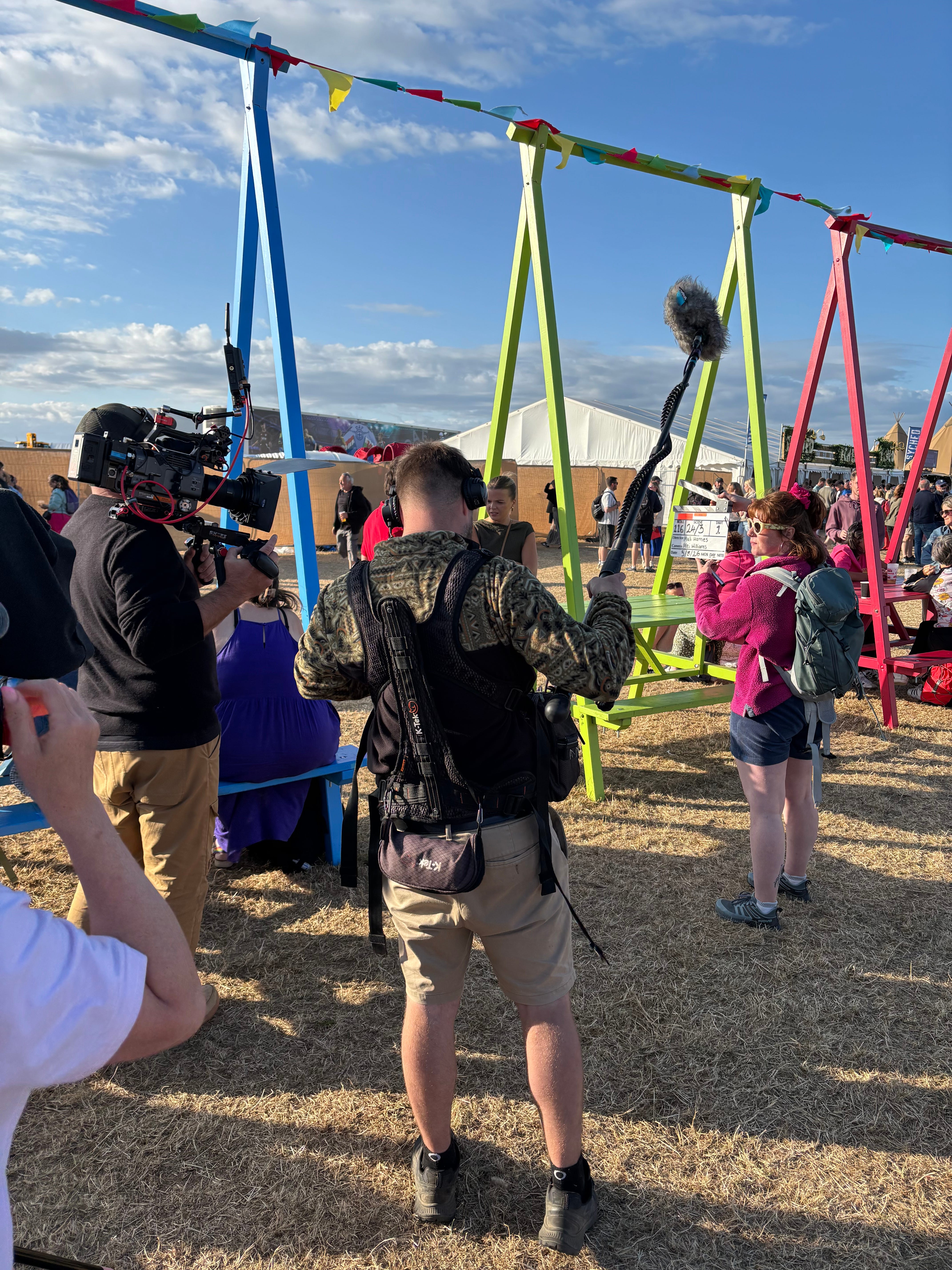
The shooting schedule on the show is 16 days, and “you’re filming a lot more content per day than you would on a linear production,” says Morus.
It’s an intense shoot, because the crew is significantly smaller than a regular production, although all the major roles are still represented.
“People tend to be a one-person department,” says the producer, who is conscientious that vertical shows don’t water down storytelling and become “cheap television” that sacrifices craft.
“The thing that is very important to us is that it’s not cutting out professions,” says Morus. “Because if there are going to be more of these and more digital content, it’s important to protect the departments within production so that it’s not cutting corners and doing all we can without that team. It’s a case of teams are smaller.”
Takeaways: Signal has a healthy budget for a vertical format; vertical series have shorter but more intense shooting schedules; production uses one-person departments that will become more common
No panoramas: ‘Every episode needs to be a rollercoaster’
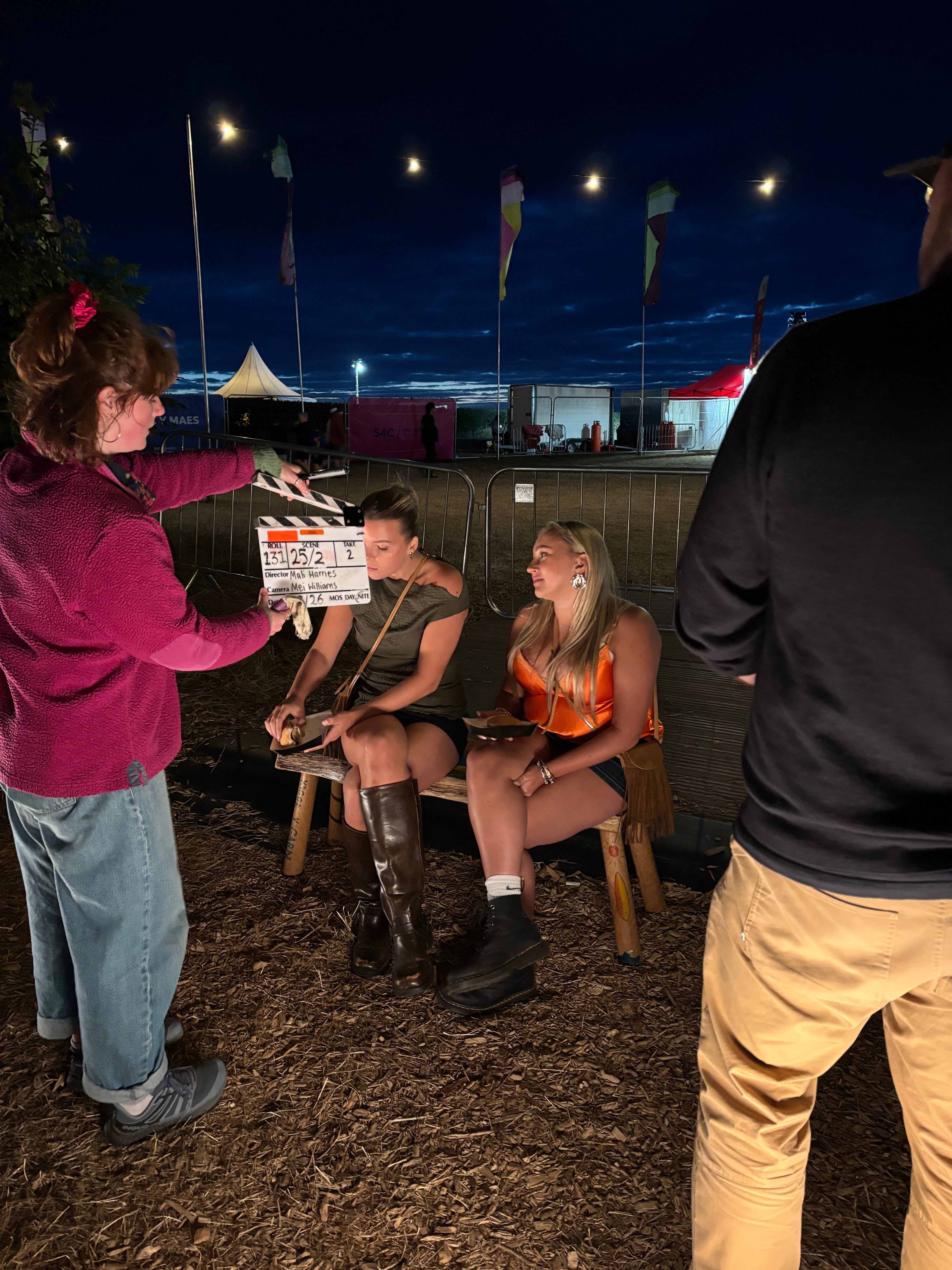
Mojo was given free rein to construct a story of its choosing that fit within Rhun’s brief of a YA romantic drama. The indie put a five-person writers’ room together, including an experienced screenwriter and four up-and-coming writers — a model the producer recommends for any vertical undertaking.
“That was a brilliant experience because you had the youthful target audience’s take on romance and dating today and how people communicate when they’re looking for a relationship, but also the experienced writer explaining how to structure the story,” says Morus.
Each writer pens 12 episodes, with each episode running up to a maximum of three minutes.
“We did an open casting call and a lot of new, inexperienced talent came in,” says Morus. “We’ve cast people who mostly have done nothing before, and it’s the same with the directors. We have four directors who have directed short films, but for whom this is their first professional production. It’s a fantastic training ground.”
That includes for the producers, too. Between the two productions, Morus describes a baptism of fire in the idiosyncrasies of vertical drama.
The first show, for example, had some sweeping, wide establishing shots of breathtaking Welsh landscapes. While the scenes might have elevated a regular linear drama, they were purged from the vertical edit because the audience loses interest so quickly.
“The commissioner said, ‘You need to get rid of the first 20 seconds.’ It looked absolutely beautiful, but those kinds of establishing drone shots and panoramas are not going to grab anybody’s attention,” says Morus.
The brief to writers while drafting storylines for the 60 episodes was to “start with something impactful, and come in hard on a close-up of somebody saying something where you’re going to go, ‘Oh, what was that about?’ so you’ll stick with it,” adds Morus. “And then you’ve got to keep on giving. Every episode needs to be a roller coaster to get you to that cliffhanger at the end of three minutes.”
Takeaways: wide and establishing shots don’t translate on vertical; writers need to start with close-ups of characters saying punchy dialogue
Digital commissions open doors to small indies
There may be enduring scepticism about the future of vertical drama in the U.K. and how the format is applied locally, but Morus says these commissions open doors for smaller companies who can cut their teeth and gain experience.
If you’re a small, new company, it’s very unlikely that a big broadcaster is going to give you a multi-million-pound drama series straight off “because it is a lot of money, and they’ve got to ensure they’re handing that money over to a trusted supplier,” he adds.
But digital content creates a more level playing field, and allows newer outfits to prove themselves and cut their teeth. The budgets are lower, “but the expectations and the standards aren’t any lower. So it allows more people to come into that market, and gives new companies a better way of proving themselves and breaking in,” says Morus.
Since Mojo was commissioned for Signal, the indie has fielded reach out from broadcasters in other countries.
“We’re in discussions regarding other dramas that could develop from this,” says Morus. “It’s something that is exciting, but for us, as drama producers, it’s just using our experience and our skills in creating drama in a different structure and format.”
Takeaways: smaller companies can cut their teeth on digital commissions with lower budgets but high standards for storytelling; success of Calls has led to international interest
Hiring? We feature paid job listings, to book a listing, email hello@theindiehustle.com
Sponsorship? If your organisation would like to find out about sponsorship and advertising opportunities, email hello@theindiehustle.com
