




Social psychology shows such as Celebrity Traitors and Million Dollar Secret are doing a roaring trade for the BBC and Netflix.
But the $64 million question is, what makes a format a hit, particularly in that category?
Great execution is vital. However there are a number of factors behind a successful concept.
So this week we spoke to format savant Glenn Hugill, who has been involved in big name shows such as Deal or No Deal - where he was the voice of the banker as well as the show’s executive producer - and set up his own indie, Possessed, which he sold to ITV Studios.
Now running Wheelhouse UK and president of its international hub Wheelhouse Studios, Hugill reckons there is something primal about why we love formats and thinks crafting them is “like creating a piece of engineering” or a new sport.
As traditional TV merges with the creator economy, Hugill reckons “one of the things that is most interesting, from talking with creators, is that they say ‘repetition is the enemy of retention’.”
With formats evolving, he discusses the ingredients for the secret sauce that make a show so delicious, including:
The recipe for format success
Why Million Dollar Secret and The Traitors are so popular
How social engineering is providing a basis for new IP
What format developers can learn from YouTube and creators
Recipe for success
He may have been an actor in Coronation Street and a presenter on The Mole but Glenn Hugill’s real love is innovating formats.
“Creating a format, a competitive format, is like creating a sport,” he explains, pointing out that both activities require devising a set of rules and the ability to adapt them as people find different ways to win.
He adds: “That’s how things evolve. I always say that my greatest skill, such as I have any, is that I’m a really good guesser. And I think really good format creators are able to be kind of agnostic about the dilemmas that they create.
“Because a really good format creates a dilemma to which there is no clear answer. But ideally, you have people screaming at the television because they think there is, but they’re screaming opposite points of view.”
Hugill - who joined Brent Montgomery’s multi-vertical media, marketing and investment platform Wheelhouse Entertainment when its UK arm launched in London in 2023 - thinks what you need to ensure is that you “get the drama” but “the drama is never predictable; we haven’t crowbarred it in. It happens organically from a really balanced rule set.”
He reckons if you can get to that point, “you’ve created something really, really great. But…you sort of have to be able to eat coriander and think it tastes like soap, but also eat coriander and think that it tastes delicious” as it requires being “able to be empathetic to both those positions”.
His acting experience may have helped him with that, he thinks.
Remember, too, to celebrate your successes. Hugill rewards himself by buying a new guitar when he gets a commission. Unsurprisingly he now has quite the collection!
Takeaways: creating a format is like creating a sport; be agnostic about the dilemmas your format creates for contestants; reward yourself for your successes

Million Dollar Secret’s success
Most competition shows build toward a prize.
But the genius of Million Dollar Secret (which, like The Traitors, has just filmed a celebrity version) is it flips that convention by awarding the prize immediately. Contestants have to convince rivals they do not have the cash and endure scrutiny created by a series of clues as to the secret millionaire’s identity.
Hugill explains the premise “came from a very simple idea…What happens if somebody wins a million dollars in the first 30 seconds of a show? Most formats are built around the journey towards the prize…[but] what happens if you put the prize at the start?”
“And so, from that point, it’s not about winning money; it’s about managing information.”
Possessing the cash means information becomes the primary currency: “When money isn’t the most valuable thing in the room, information is, you get this fantastic paradox that you would normally not [have] and it puts people in this extraordinary position.”
He thinks the success of The Traitors “opened the door” to commissioners being keener on psychological strategy games like Million Dollar Secret.
They have “always been my favourite genre”, he says as they create “a really big escapist spectacle that is tremendously relatable”. He compares them with, “chopping up vegetables and hiding them in your kids’ pesto pasta: you have this huge human takeaway behind this tremendously entertaining front end.”
Hugill cites The Mole as a pioneer but “they sort of laid dormant really until The Traitors”, which he thinks broke through not just because it’s “absolutely brilliant” (and made by Studio Lambert, “one of the greatest production companies in the world”) but also because “it landed at a perfect point in history where it just felt like lying had no consequences in the real world as well as being tremendously well made and well iterated.”
“Everything just seemed tremendously low stakes when it came to lies. There was no comeuppance for dishonesty. Then along came Traitors and it was tremendously satisfying.”
“I think it exploded with the public who were really ready to see something like that…you were able to kind of rehearse the anxiety of dealing with that in real life with your feet up and a drink in your hand. It reminded people of how great this genre is.”
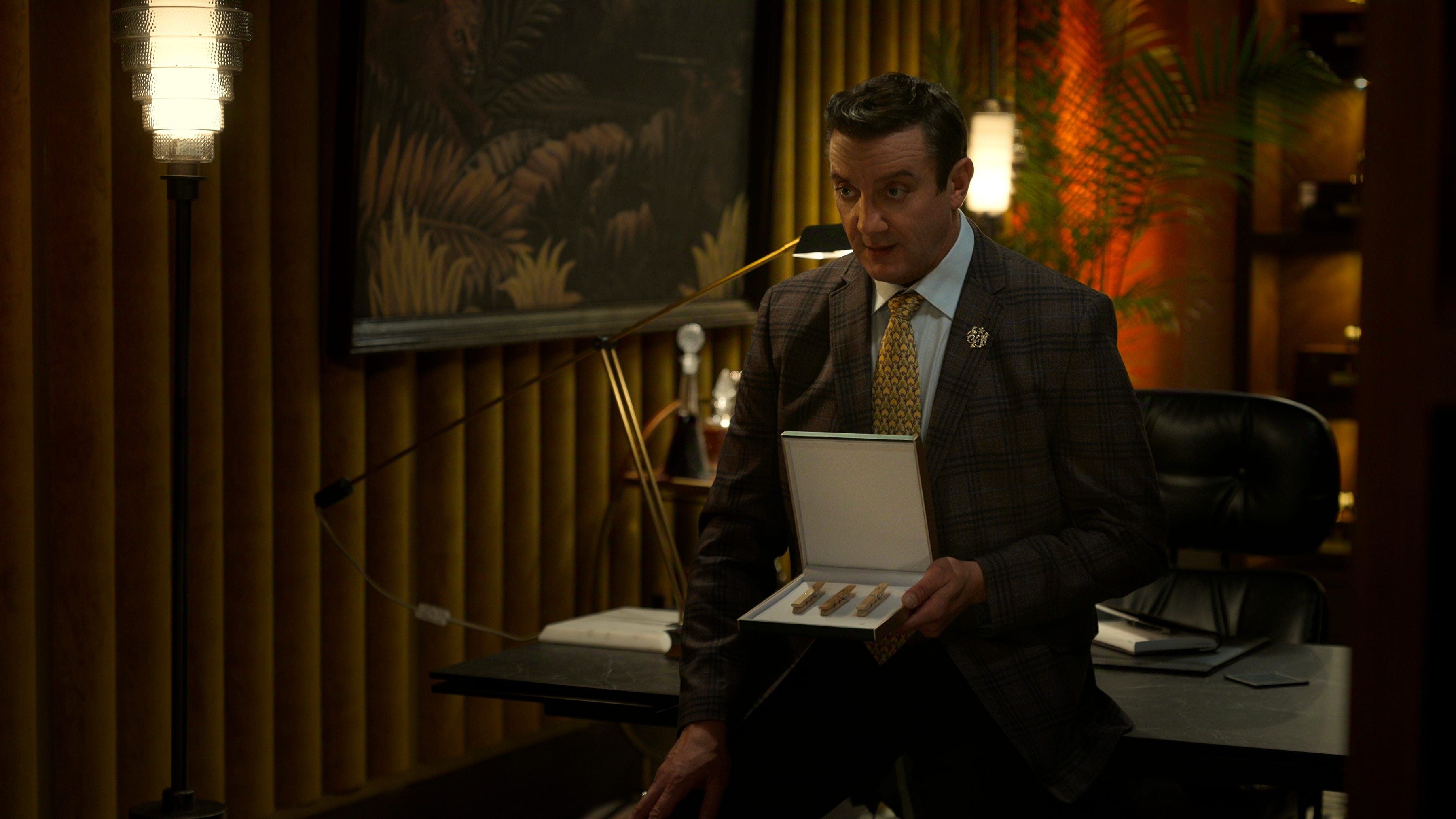
Another important aspect of The Traitors and Million Dollar Secret is they create worlds for viewers to escape into. The dramatic backdrops of Ardross Castle and atmosphere created by the interiors and host Claudia Winkleman’s clothes are part of The Traitors’ lore, as is The Stag luxury lakeside retreat of Million Dollar Secret and demeanour of host Peter Serafinowicz.
“The best thing I’ve heard all year is Traitors winning the Emmy for best costumes,” says Hugill. “We’ve reached the point where reality shows are allowed to build such a world to be sufficiently escapist and that’s key. Because we’re competing with short-form vertical, where the number one thing is ‘I’ve married a billionaire werewolf’!”
“That’s what I love about Million Dollar Secret. Peter is sitting there in front of a 15-foot-high stag’s head. We’ve arrived in a world where you can really give people escapist entertainment that has this incredibly sharp social commentary behind it. That to me is perfect.”
Takeaways: subvert conventions to innovate; tap into societal concerns and behaviour; formats that world build can have more impact

Social engineering shows evolve
Both Million Dollar Secret and The Traitors are prime examples of social engineering-based series. The psychological competition formats allow audiences to explore human behaviour within an entertaining framework.
Hugill thinks that the best examples of the genre “take you somewhere escapist that you can literally slip into like hot butter. But what they really generate is arguments between people.”
He predicts more expansion, saying “what I’m seeing now in projects that I’m doing with networks” is looking at “other forms of social engineering. Deception is just one way.
“It was perfect timing with Traitors because deception felt like it was on the global stage. But of course in real life we [also] use charm, sense of humour, sex appeal [and] intimidation.”
Perhaps brush up on your reading of Aesop’s fable about the sun and the wind, as Hugill explains: “There’s lots of ways in which people get what they want and I think social engineering formats that test those kinds of abilities are every bit as relatable.”
“We’re moving into areas where we’re doing social engineering that rely on other elements, rather than just deception, and that’s exciting.”
Takeaways: observe social trends and human behaviours and anxieties; evaluate how you can evolve the genre
Learnings from YouTube and creators
Platforms like YouTube offer a practical way to demonstrate concept viability, which Hugill says is useful when “everyone in the business right now is chasing certainty.”
He adds that “in a nervous market” buyers don’t want ideas so much, “they want evidence and that’s why we’re seeing so much iteration of existing IP.”
“YouTube is the biggest focus group ever built”, explains Hugill, pointing out that “Talpa’s already turned YouTube formats into TV shows”.
But there is much you can also learn from creators’ insights.
Hugill gives this example: “One of the things that I think is most interesting from talking to creators is that they say, ‘Repetition is the enemy of retention’. Let’s say Survivor didn’t exist. I could go to a YouTuber and say, ‘I’ve come up with this amazing survival format. It’s called Survivor, and this is the way that it works’. And they would go, ‘That sounds like shit’.”
He explains they’d baulk at the idea that each episode essentially does the same thing, albeit with a different challenge and fewer contestants.
“What you can’t do as a legacy format creator is ignore how different all of that is. There’s so much to be learnt from what’s happening.”
“One of the things I think’s going to be important in formats going forward is finding a way that the format itself is across an arc and isn’t episodically repeating in the same way,” adds Hugill.
“Essentially the format is an accumulation. Maybe that’s one of the reasons something like Race Across the World stands out, because a modern audience - which has grown up on the idea of repetition not being something that they want - recognise or like [that] sort of an accumulative format.”
“That kind of thinking will become increasingly important. And I think that coming together of the creator economy and the legacy economy to create something genuinely new and genuinely different is really exciting.”
Takeaways: use YouTube as your focus group; build cumulative arcs; avoid formulaic repetition