


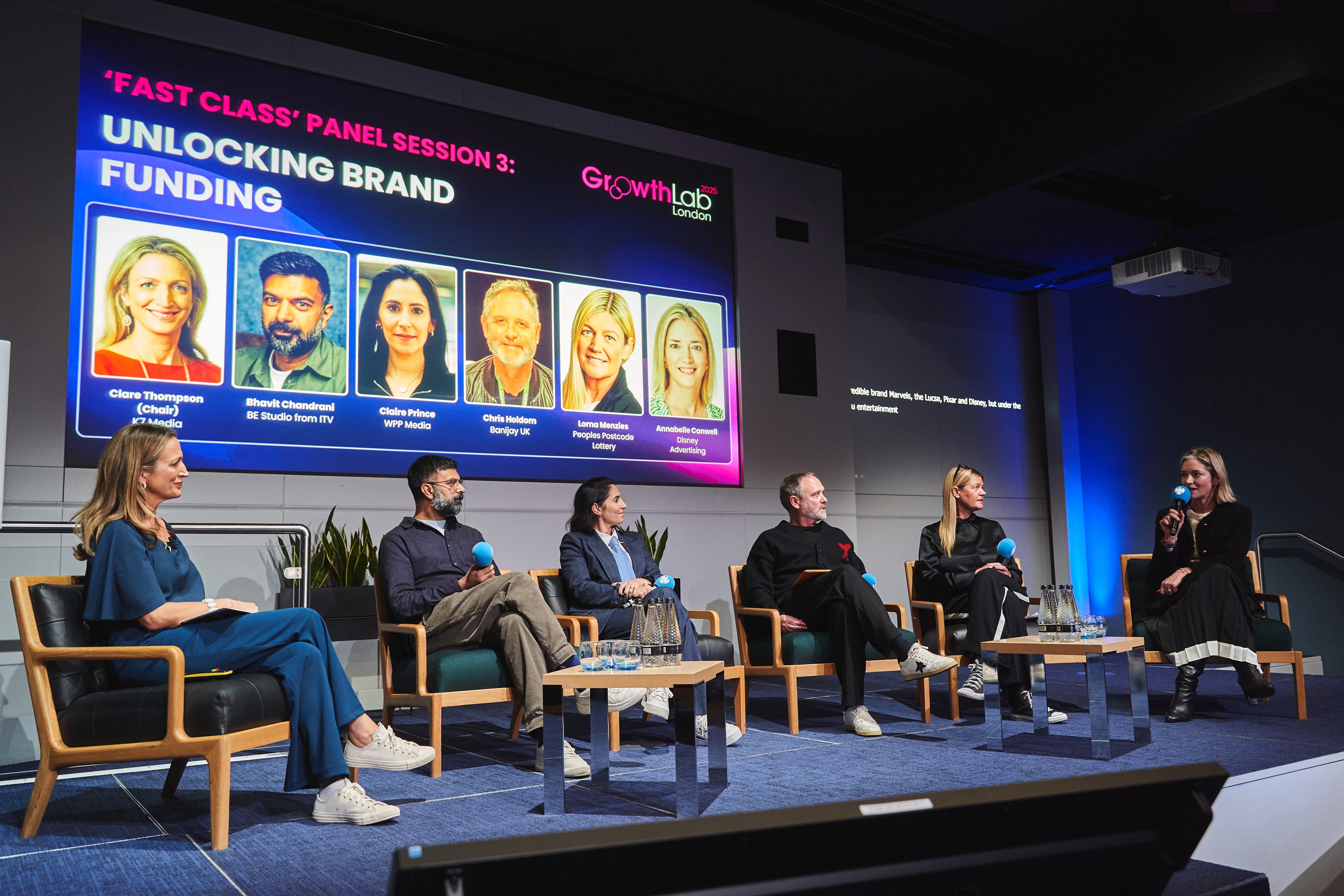
At Growthlab London two weeks ago, leading speakers working across new revenue streams discussed how fresh avenues for growth are opening up in 2026 and beyond.
From innovative branded content relationships to a new chapter in drama, there were opportunities discussed to take into 2026 and beyond.
So we’ve compiled some of the best actionable insights for this week’s newsletter; read on to find out:
Where the new possibilities lie
How to capitalise on a “new chapter in modern storytelling”
How to sweat your assets
How small indies can have the edge
Where the new possibilities lie
In an era where the traditional lines between advertisers and commissioners are becoming more blurred, even heritage companies like Disney are more open to branded content.
In a session called Unlocking Brand Funding, Disney Advertising VP, partnerships Annabelle Canwell said, “although we’ve been doing branded entertainment and storytelling of brands for decades” the company is “really excited by the kind of future opportunities for Disney+ to work with brands” in the “more authentic, long-form storytelling space.”
She added: “There’s a lot of variety in what we’re looking to bring to the platform, and… variety of the opportunities we might be seeking with brands and partners. So think again about Disney+ and what you think might be the kind of content we’re interested in.”
Canwell said you might “be surprised by what maybe we would be looking for and always bring opportunities to us again through the commercial lens; we’ll look at whether there’s an opportunity to get a show here that maybe wouldn’t happen directly, just with commissioning.”
All those on the panel - WPP Media head of branded entertainment Claire Prince, BE Studio from ITV director Bhavit Chandrani, Banijay UK head of commercial partnerships Chris Holdom and People’s Postcode Lottery director of culture and experience Lorna Menzies - agreed with Canwell that branded content is now a massive part of the media mix.
Prince said that previously, “it might just have been one or two brands playing in the branded entertainment space. We’re seeing pretty much most of our clients interested in some way, some might just be dipping their toe in the water with starting with sponsorship or doing some social branded entertainment, all the way through to embarking on long-term branded entertainment strategies for their brands.”
The success of ITV game show Win Win, which is backed by People’s Postcode Lottery, was highlighted by Menzies and Chandrani as a useful blueprint in how brands can work with production companies. Menzies said its mix of the excitement of live and national appeal meant it was the perfect “alignment of values and objectives.”
Prince also gave the example of a Channel 4 documentary about cancer scientists developed with Cancer Research and blue light doc specialist Banijay-owned Dragonfly, which she said is “a traditional documentary with access storytelling, but obviously a very clear reason for the brand to be a part of that.”
Her advice if you want to get into branded shows was: “we always advise that you bring someone into the production company that has experience of managing agencies and clients, because they’re another stakeholder that have their own needs and wants. That needs to be a dedicated person that knows how to deliver those things. It shouldn’t be the producer/director or the line manager.”
Menzies added this food for thought: “As a brand, I’m really excited because I think there’s so much more that we can do. So if you’ve got any ideas, anyone out there, we’ve got deepish pockets.”
Takeaways: look at how brands can align with your creative ideas; Disney and People’s Postcode Lottery may provide new opportunities.
How to capitalise on a “new chapter in modern storytelling”
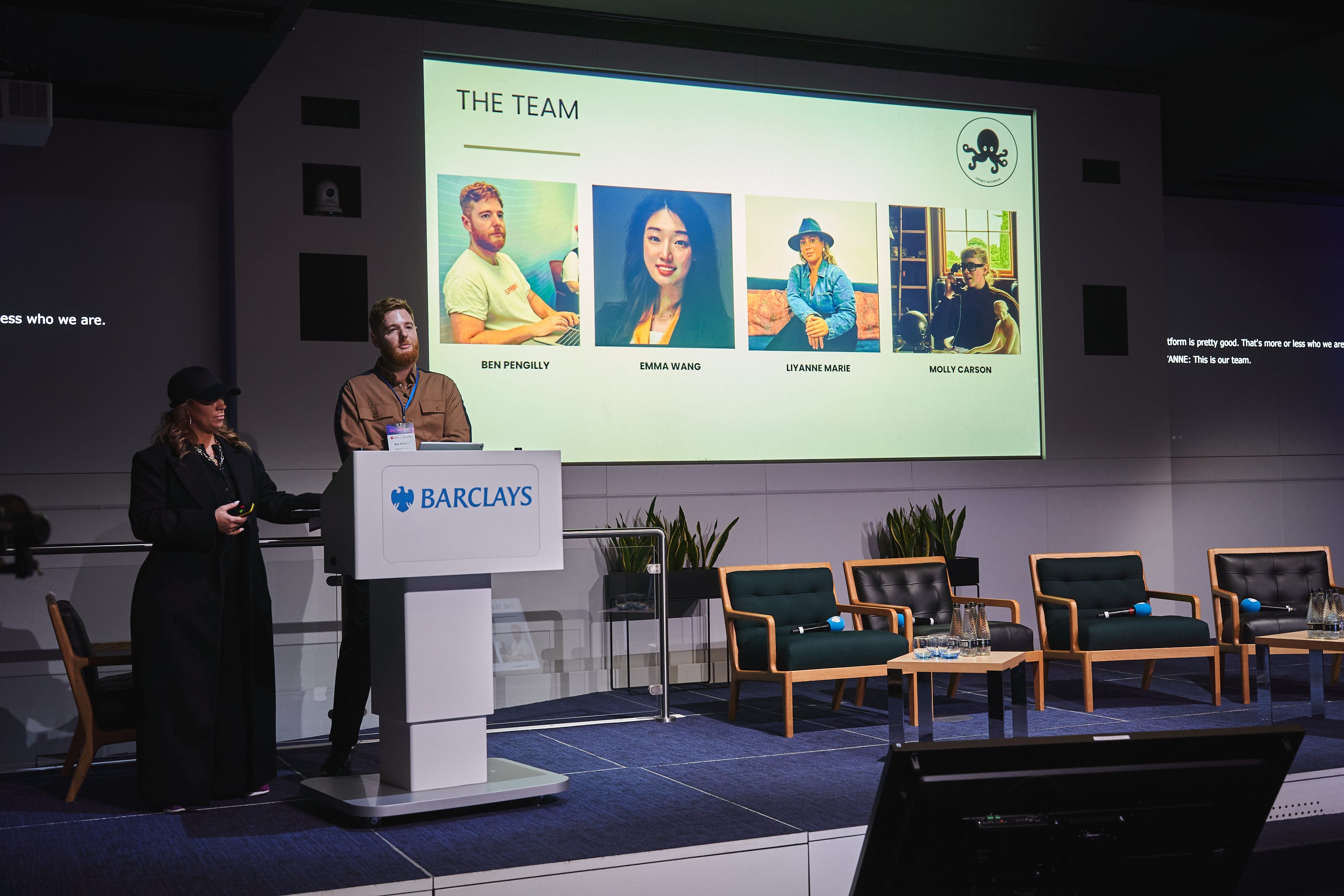
One of the most enthusiastic talks at GrowthLab London came from vertical drama specialists Onset Octopus.
Founder Ben Pengilly and talent director Liyanne Marie said the global trend for the genre can provide “opportunity for production companies to be involved… we’ve been able to work more consistently than maybe we would have if we weren’t involved in this kind of format.”
Marie said the appetite for fast soap drama film formats and short clips reflects the popularity of TikTok and social media reels, which are shown in a vertical format.
She said the new, hard-hitting, cliffhanging vertical dramas “are not a trend - they are a new chapter in modern storytelling.”
Pengilly explained Onset Octopus is “the first and only British vertical company that’s operating at the moment. We’re the only company that’s shot abroad in the vertical format, the only company that’s done interactive verticals. No one else does what we do at the moment in the UK.”
The genre is huge in China and growing in the US “and it’s slowly starting to trickle down to the UK”, to the point Pengilly thinks “the UK is going to be the next big vertical scene.” He explained that “when we shot the first vertical I had no idea what a vertical was. No one else did either. We shot the first in April 2024 and that rose to 60 million views in five months.”
He said that the ROI is promising “against the relatively tight budgets that we work with.”
Plus the company is “giving a lot of people opportunities. A lot of actors are working that have had no opportunity to work.”
Marie added: “Things are tough in the industry… work was really slow and the vertical drama world for us has kind of given us the opportunity to be working quite consistently, to be working with the right crew and directors.”
Encouragingly Pengilly said there is fertile ground for you to sow production seeds in, as “the UK is the only market that is completely wide open. So it’s really interesting times. I think in the next 12 months you’re going to see a lot of interest.”
Takeaways: explore pivoting to vertical films; examine existing IP to see if it can adapt to vertical drama.
Sweat your assets
How can you wring more from your IP and ideas?
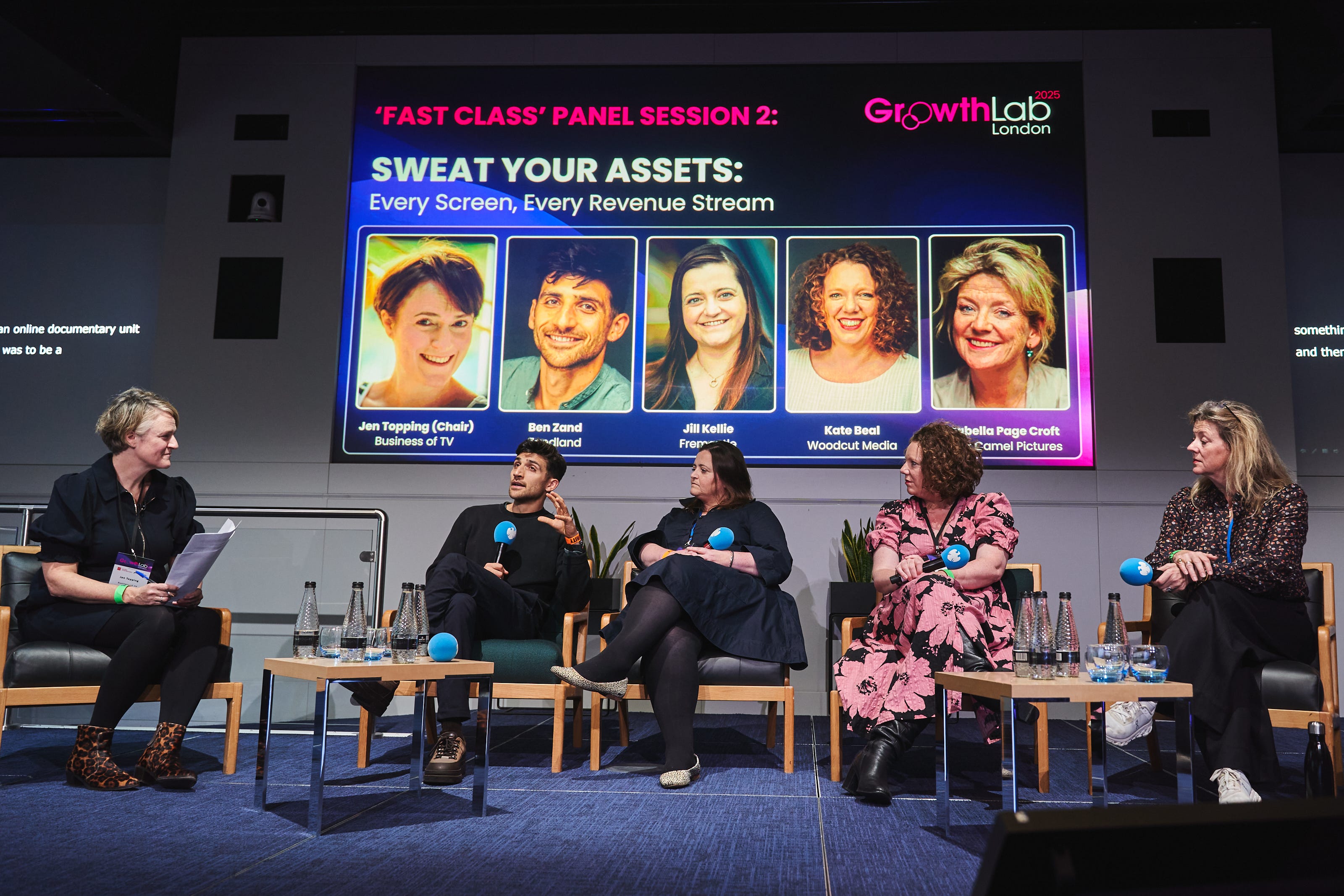
That was the focus in a session called Sweat Your Assets: Every Screen, Every Revenue Stream.
Woodcut Media CEO Kate Beal said it’s vital you “start with the content” and she had this advice: “I sort of think of it as a spider. Somebody called it an octopus the other day.”
“It’s always about bringing a story for me, and then working out how you can use that content in so many different ways. So yes, we have YouTube channels, but equally, we have a podcast channel, we have a FAST channel, we repurpose our archive in other ways.”
“And then there are the broadcast programmes, the commissioned programmes. And so it’s taking that content and using it in every way... here’s the access, the idea or the premise, and how can we sweat it in so many different places? Because you kind of need all of it to make one of it work. You can’t do it on its own.”
Zandland CEO and founder Ben Zand thought it was about “what could you practically do based on the money you have to make things?”
He explained the way his company generally works: “We’ll focus primarily on either long form documentary or podcast and then see the other platforms as kind of derivative of that. So YouTube would be the primary platform for it, then we’re creating content from that for Instagram, TikTok etc and that’s basically how we rationalize it. A big part of it is kind of leaning into what is our unfair advantage in this space? What’s our unique proposition?”
Merchandise is another option, as The Brilliant World of Tom Gates producer Black Camel Pictures CEO and founder Arabella Page Croft pointed out, explaining, “I really thought if I was making pencil cases and backpacks, I would be so rich!”
However she gave this insight: “There’s no doubt that the bulk of the revenue for the Tom Gates Company comes from production. There’s no sugar coating that. Everything else is an experiment. I do think you need to really question - we’re all producers - you’ve got to value your time. Your job is to say no to a lot of things and really be super focused about what you’re experimenting with. What is really going to pay the bills?”
Takeaways: have a mixed economy of outlets for your IP; work out what specialist skills you need to make your content work on YouTube; remember what pays the bills.
How to Grow a Small Indie
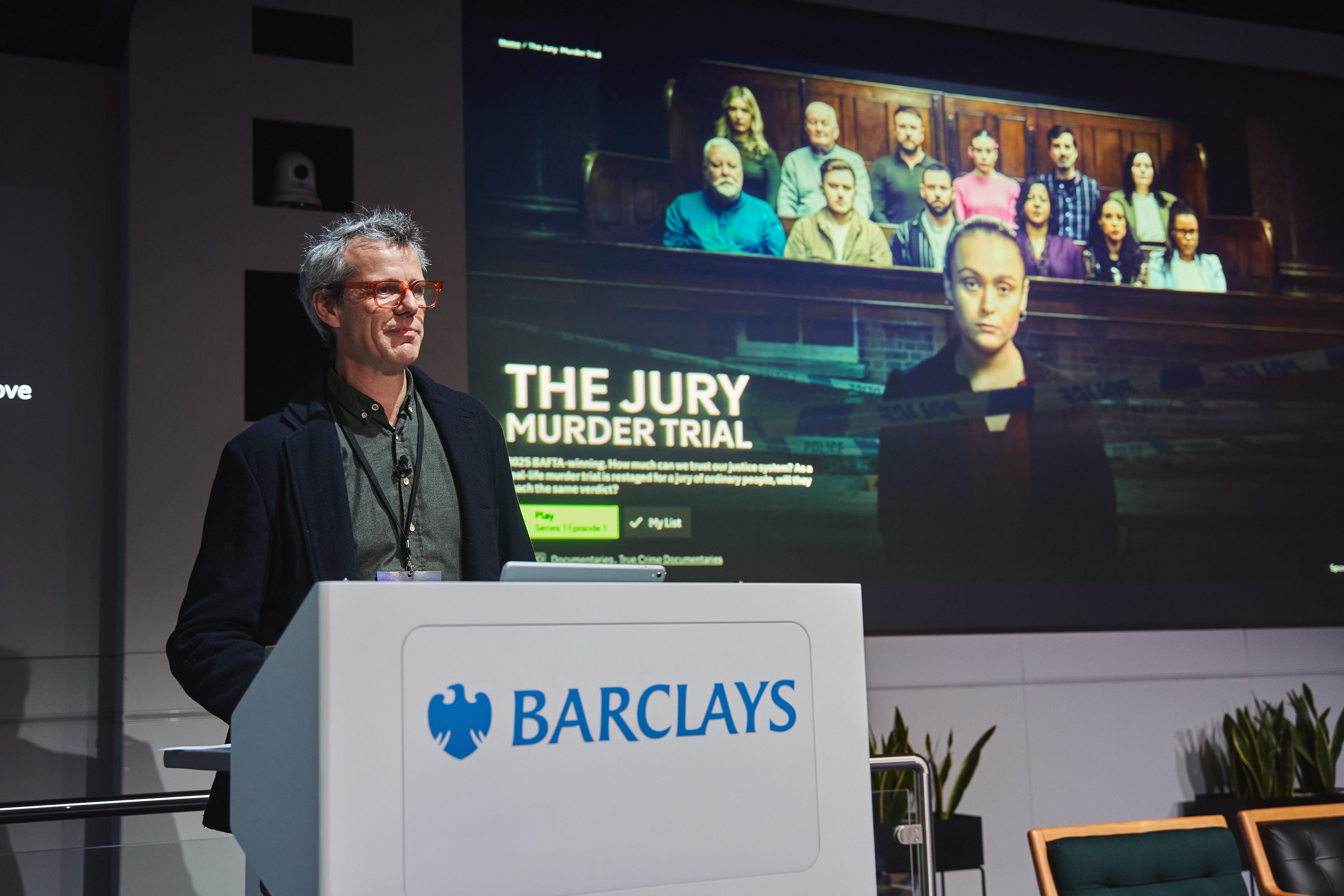
One of the prime recent examples of a small indie that has pulled off one of the biggest new launches in recent years is The Jury: Murder Trial - a Channel 4 legal experiment from Brighton-based Screendog Productions which examines the jury system and its biases.
Screendog founder Ed Kellie said he is often asked how “a small, regional indie” created what has become an internationally studied format, and he gave some lessons on how you can achieve similar growth in a Lab Talk session.
“Lesson number one, which is hopefully good news for lots of you here,” he said, is “the size of your company doesn’t matter.” What does is “creative ambition and never giving up… the truth is, small or big companies genuinely can pull off very, very ambitious shows.”
Obviously it’s “partly about the idea” and The Jury “took us three and a half years of funded development… to convince ourselves and the channel that we really could pull it off.”
But what he realised was that what Channel 4 was “really looking for is someone who is going to take total responsibility for what you’re delivering,” and he thinks that can give smaller companies the edge.
“I actually think that smaller companies, which are nimble and creator-led, can make quicker decisions. We can be more creative with the money. We can be more creative with the staffing as well as the actual storytelling. And actually, that’s so important with projects like this; I genuinely think that we have an edge.”
Kellie also advised you to “lean into your strengths and your USP; no-one likes to be put in a box as a company, but it really is important for your company to be known for something and to use that as the core of your development.”
“We try and pitch all sorts of different things all the time. But the reality is that what people want and expect from us is ambitious, innovative formats, and they don’t have to be big and expensive… we’ve got two in development at the moment that are a fraction of the cost of The Jury, but they do need to stand out.”
He concluded: “Think about the projects on your slate that really define you. And crucially, are they big enough that, if they come off, you can build everything else around them? Because if you haven’t got one of those running in your company at any one time, it’s really hard to grow.”
Takeaways: size does not matter, innovation and your USP do; what defines you, and how do you build around that?