



At last week’s Mipcom market in Cannes, the byproducts of industry consolidation were writ large across the Grand Palais grounds, and the freshly combined distribution might and sprawling catalogues of companies such as Banijay and Skydance came into full view.
Increasingly, producers seeking distribution for their shows must choose between a big player with the resources to invest at early stages (but whose sales priorities may not include them) and small distributors with the bandwidth to fight for your title.
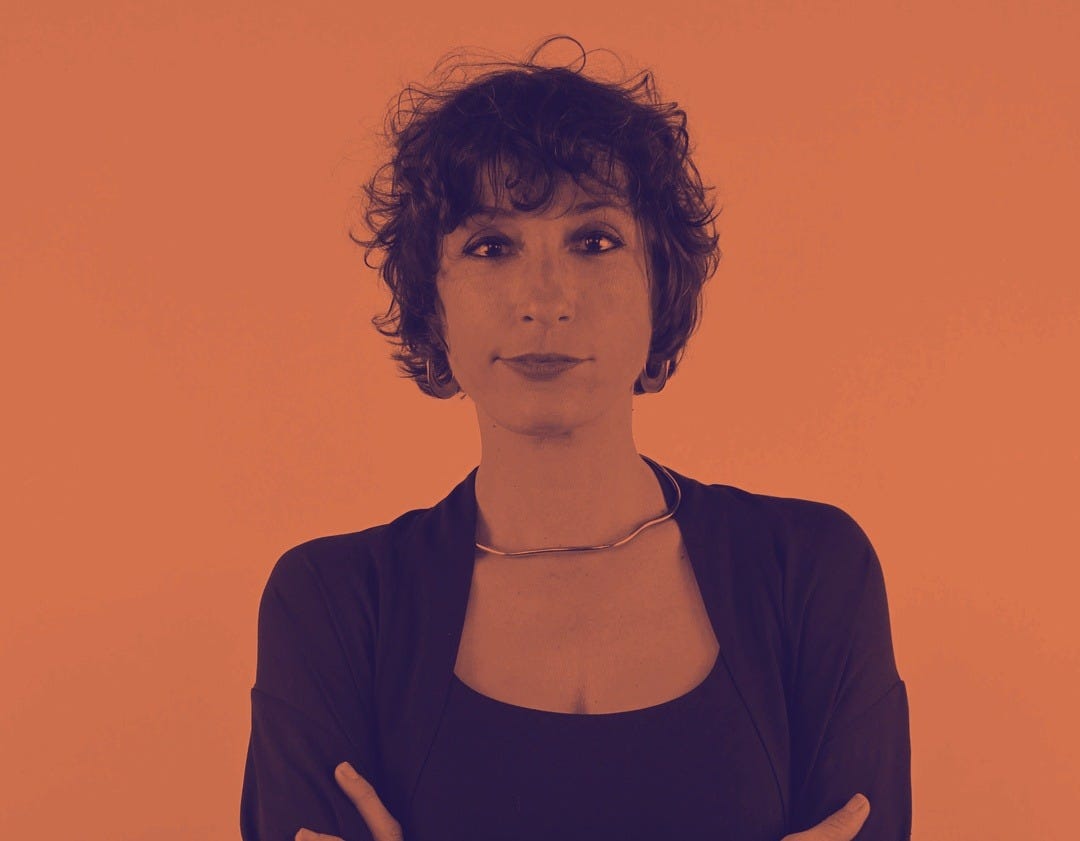
Limonero Films founder Pamela Martinez runs the latter. She started the boutique documentary distributor 10 years ago, and has grown it from a one-woman band in London to a six-person operation based out of Barcelona. Limonero focuses on specialist factual areas such as current affairs, history, wildlife and human interest stories, and works across TV and feature documentaries.
In the decade since she’s been operating, Martinez has witnessed a sea change in the available buyers for specialist factual, and the expectations heaped upon modern distributors.
“All these mergers and acquisitions have dwindled the number of buyers, and there is much more competition than when I started,” says the Spain-born executive. “Sometimes I go to festivals and there are 20 sales agents and 10 buyers.”
There may be fewer traditional buyers, but audiences shifting to YouTube, FAST channels and AVOD have resulted in “hundreds and hundreds of platforms” that simply didn’t exist 10 years ago, opening up new avenues for sales.
In this week’s Indie Hustle, Martinez details the AVOD boom and the current trends for specialist factual. Read on to explore:
How documentary slots are disappearing but Martinez is fielding more documentary submissions than ever
The growth of AVOD sales, and how they can keep a sales business afloat
Why wildlife programmes made for less are finally working
Why more distributors need to say ‘no’ to content they know they can’t sell

Building an indie distributor from scratch
The documentary space has endured a reckoning in recent years as the slots for “pure documentary” have slowly disappeared from schedules.
Licensing fees are narrowing, meaning less money; the sales packages that distributors relied on are eroding; and broadcasters want longer windows with worldwide, non-exclusive AVOD rights. “Before, they were happy with a 30- or 60-day catch-up window on their platform,” says Martinez, “but now they will request AVOD worldwide catch-up rights or on YouTube. And sometimes, it’s a deal breaker.”
Meanwhile, decision-making time is getting longer and longer, from what used to be a three- to six-month process to up to a year-long wait.
Yet these market shifts have done little to stem the tide of projects hitting the market. Martinez has noticed a vast uptick in documentary product since the pandemic thanks to accessible and affordable high-quality cameras and editing software. “People are producing and producing and producing,” she says. But because the volume isn’t always matched by quality, distributors “have to be really selective.”
Takeaways: licence fees are lower and documentary slots are disappearing; decision making is taking longer; broadcasters are asking for longer windows that can be dealbreakers; Martinez is engaging with more documentary content than ever
Navigating the AVOD Boom
A growing percentage of Limonero’s sales are coming from the AVOD market. Last year, they comprised around 15% of the company’s profits; this year, that figure is forecast to be even higher.
“We have back catalogues that are not on the website, and they are specifically for AVOD exploitation,” says Martinez.
The exec works with decades-old back catalogues of international production companies that would otherwise just be “sitting on a shelf.” She asks the producers to go through their hard drives and create mp4 screeners with metadata. “Some of them hate me, but once it’s done, they’re very grateful they did their homework,” she says.
The distributor then compiles the content, completes the avails (the available rights and the deals already in place) and then delivers the material to broadcasters and platforms.
Companies such as Germany’s Quintus Studios and Trias Media Group, Australia’s Madman Entertainment and France’s ZED and TF1 operate vast networks of AVOD and FAST channels that buy documentaries. The finance models are all revenue share, though Martinez negotiates for at least 50% in all deals.
“At the beginning, the content does really well” and brings in thousands of Euros, she says. “The maximum we got from a quarter was €7,000 from a provider, which is very decent. But in my experience, it goes down by half every quarter.” That’s why distributors need to work with multiple providers to ensure funds are flowing from as many platforms as possible.
Broadcast sales comprise the majority of Limonero’s business, but AVOD is becoming a meaningful revenue stream for documentary content.
“It’s becoming a big thing, and some [distributors] are living off it and making £100,000 a year on AVOD revenues. The deals are not exclusive, so it really works,” says Martinez. “But you need to be proactive, have lots of content and really follow the trend. If one provider doesn’t work, you need to find another one.”
While producers are, of course, able to leverage their back catalogues on their own, the exec encourages working with a distributor because the process is deceptively challenging. “You need to know inside out how SEO positioning works, and if you’re not savvy, your content will just sit there,” says Martinez. “Yes, anyone can do it, but don’t think that it’s easy. You need to know a lot about tagging and localisation.”
Takeaways: Martinez encourages producers to go through old hard drives and create screeners for digital platforms; some distributors are able to keep their businesses afloat just through AVOD sales
Aggregator relationships
As far as buyers go, platforms such as Netflix and Disney+ are extremely selective but still require local documentary titles, particularly as they have European content quotas to fill. However, Martinez notes that many prefer to work through aggregator services such as the Netherlands-headquartered ODMedia.
The Dutch company serves as the conduit between IP owners and distributors and platforms, and also handles technical services. The company sells on behalf of distributors like Limonero, but keeps a 25% cut of the licence fee.
With the global streamers, it’s better to have direct relationships with executives in each region. “With Netflix, we try to work with the regions,” says Martinez. “We know Netflix Africa, we know Netflix Middle East, we know Netflix Spain.”
Takeaways: Aggregators such as ODMedia are popular conduits between platforms and IP owners/distributors but they take a cut of the licence fee

Content trends: Wildlife back in vogue
Among the areas of content on the rise, Martinez points to wildlife shows making a comeback. While natural history is often associated with blue-chip efforts from the likes of the BBC Natural History Unit or Silverback Films, smaller producers who can work quickly on smaller budgets are increasingly getting in the game.
Martinez reached out to every wildlife producer in Spain around the pandemic and built up these relationships over the years. She now handles the complete catalogues for at least two production companies and sales of these wildlife titles are “saving” her budget.
“We released our first original wildlife series, The Savannah: Wild Happiness, this year, and I raised the money through pre-sales,” says Martinez, noting that the show was turned around in 18 months.
“Every public broadcaster needs wildlife for escapism,” she explains. “Before, it was very concentrated in the BBC, NHK, PBS Nature. But now, broadcasters are more open to working with smaller producers, like mine. That was difficult before… My director directs, writes, produces and edits himself. He does everything - for a smaller budget.”
Takeaways: affordable and fast-turnaround wildlife programming is on the rise; more broadcasters are open to these sales
The next 10 years
It takes time to build a documentary distributor from the ground up because so much of a sales operation is built on territory-specific relationships that take years to cultivate. Martinez says Limonero is finally at a point where the team has those connections.
“My ambition is to survive and grow revenue,” says Martinez, who has a turnover target she’s close to hitting. “We want to grow financially and to keep producing. We’ve become an executive producer, and I want to do more originals.”
The executive, who worked at Boulder Creek International and TCB Media Rights before setting up the business, says transparency is essential for both distributors and producers. Her advice for peers is to “say no.”
“I have made mistakes in the past, taking on things that haven’t sold because I thought, ‘Oh, this is going to fulfil some need,’” says Martinez.
“Everything is getting more fragmented and more difficult, and your reputation is all you have,” she adds.
Takeaways: Limonero close to reaching turnover target; distributors must say ‘no’ to content they know they can’t sell