


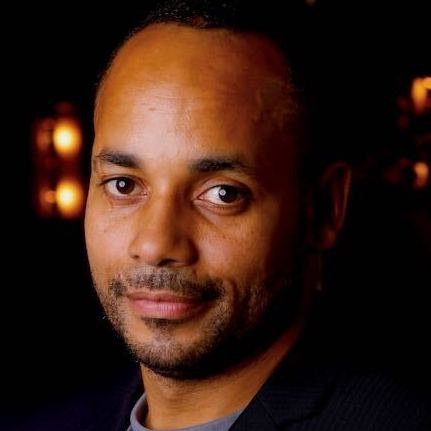
From shooting a new film that could update audiences’ Richard Curtis-esque view of Notting Hill, to cold-calling Beyoncé’s father Matthew Knowles to collaborate on a children’s show, and from working on a documentary marking the tenth anniversary of the Grenfell Tower tragedy to creating a new studio space, Doc Hearts’ founder Andy Mundy-Castle is juggling a wide portfolio.
His company has embraced both diversity and diverse funding models. The latter wasn’t necessarily through choice, but it’s paying dividends now, financially and on the awards front. Doc Hearts won a BAFTA last year for White Nanny, Black Child and the recent IndieLab Innovation Awards Diversity & Inclusion prize for Geordie Stories: Nathan & Dad.
So what is his roadmap for how true indies can keep moving forward?
Read on to find out about:
• Funding stories through new sources of income
• Making authenticity key
• How embedding in communities can create better content
• Future-proofing your indie through digital, IP and infrastructure
Creative new sources of income
The commercial realities of the current market might be a jolt for some, but finding new avenues for funding is something Mundy-Castle has been doing for years.
He explains that not being part of television’s “inner circle” meant his company had to look elsewhere for money - a perceived disadvantage in the previous era, but now a strength.
“I think the fact that our niche, and sort of not being in the inner circle of television, has kind of ended up holding us in very good stead.
“I had to constantly look in very dynamic, diverse places for the financing and be quite disruptive and unorthodox with our models of trying to raise money.”
As a true indie focused on a wide range of opportunities, Doc Hearts has the freedom to source finance globally and creatively, without waiting in line behind hundreds of other development projects.
He explains: “You can literally go wherever you want around the world to facilitate content. I’ve just been having a conversation with somebody who wants us to consider doing work in the British Virgin Islands. We’re strongly considering what that looks like, what shape that is, and what rights we can then have to create content that we can sell into the acquisition pipeline globally.”
That potential source comes through the islands’ tourist board, and the potential deal is “indicative of the kind of landscape for true indies who don’t just rely on the television commissioning pipeline - as much as I would love to be self-sufficient on that pipeline, it isn’t a reality, and it isn’t a reality for many companies.”
Mundy-Castle adds: “If you don’t have a story that’s urgent, you’re in a pipeline of development amongst hundreds of other companies - months of working out the ‘isms and schisms’ of an idea. Then the production of it which, invariably, the numbers still don’t quite make sense unless you are doing one of those juggernaut shows.
“And even then, you’ve still got to really monitor percentages for the company. So I’ve always looked at it like this: the vehicle of commerce that we choose is storytelling. The playground is every industry beyond just broadcasting.”
Doc Hearts has worked for a wide range of clients, including banks, sportswear companies, tourism boards, airlines and charities. The social good sector can be a useful source of funding - Doc Hearts received paid development for a medical-based crime doc from Prostate Cancer Research.
“That fortunately came to us because of a collaboration on a development we were doing at an initial stage with Steve McQueen’s company, Lammas Park, which we’ve now progressed self-sufficiently,” explains Mundy-Castle.
“Things come to us in a varied manner. And in this current landscape, it’s hard to completely say no to things. If it does make some form of financial sense, if it’s not going to cost us to do it, and if it aligns with our values, then I pay close consideration to that.”
He adds: “What is interesting is I’ve literally just been having a conversation about an AFP that we’re working on, and the commissioner wrote to me and said, ‘God, you’re moving so fast - normally we’d speak to TV producers and it takes them a while to get their head around how to approach a brand, because they’re so used to the traditional commissioning model.’
“Fortunately for me and us, one of the lifebloods we had initially was branded content.”
“So having those conversations, or knowing how to access brands in a certain way, comes easier to Doc Hearts,” he pointed out. “We’ve managed to cut through that. I think where even bigger TV production companies still struggle is that immediately the margins won’t make sense.”
That creates an opportunity if you’re a smaller indie.
Takeaways: your difference can be a strength; treat funding as a creative problem; consider tourism boards as a source of funding; look at partnering with the social good sector.
Making authenticity key
If independence is one pillar of Mundy-Castle’s approach, authenticity is another.
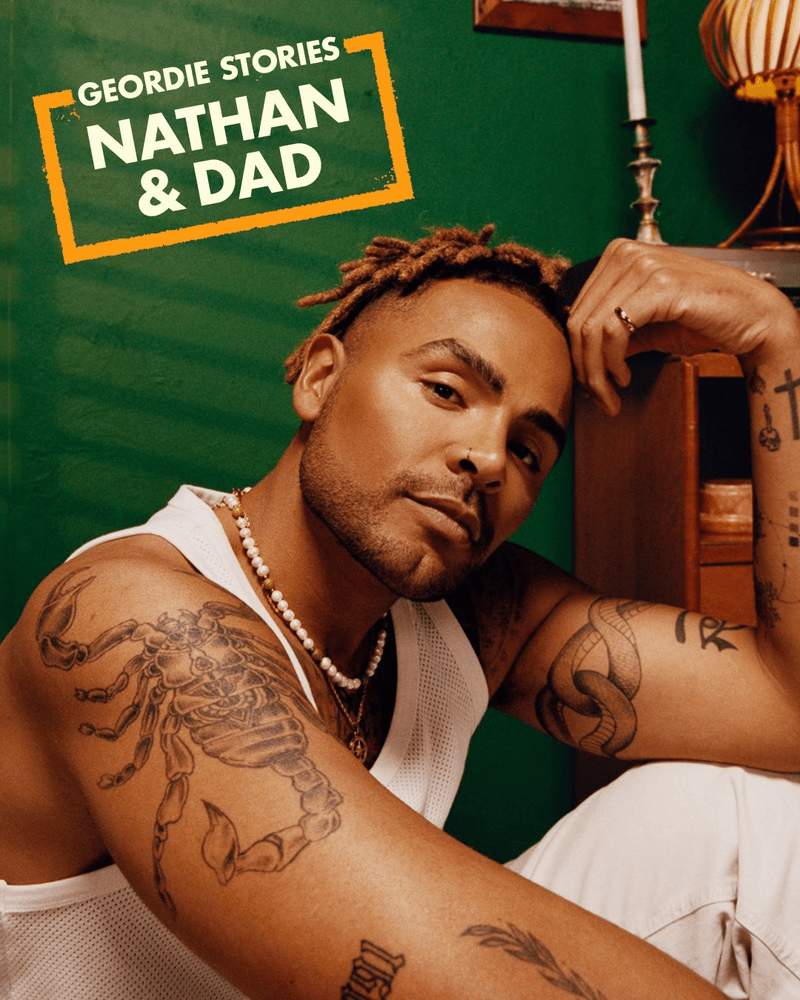
Reflecting on Geordie Stories: Nathan & Dad, he pointed to the unique “nucleus” of the MTV production: a Black female commissioner, a Black-led indie, and a story centred on a young Black gay man and his father. “I don’t think it’s common,” he said, despite the industry’s rhetoric around diversity.
What made the project particularly powerful, he said, was that Nathan Henry was already a genuine reality star, embedded within MTV’s long-running Geordie Shore brand. The authenticity was real, the audience already there and stereotypes were challenged at every level of production.
Stories rooted in under-represented communities can take longer to get commissioned and require more trust from decision-makers. But when they do reach the screen, Mundy-Castle said awards help by highlighting the unseen work behind the project.
He added: “There are very nuanced challenges as the industry gets tighter and more squeezed for people who are trying to show the true diversity of content on screen.”
Takeaways: build authenticity into the DNA of a project, not just the pitch; align real audience buy-in with lived experience; recognise that representation off-screen is part of the creative outcome.
Embedding in communities creates better content
Community-rooted production pays dividends, says Mundy-Castle.
Discussing the company’s forthcoming Grenfell Tower anniversary project, he explained that the directors had been filming in the area long before the fire.
“Wyn Baptiste and Dom Asbridge are directing and producing it, and we’re on board as exec producers alongside a couple of other companies, but we’re the vehicle they’re running through. They’re two lads from the area, from Notting Hill, and they were making the film before the fire.”
“It’s actually not until the film comes out that you’ll see the gold of what they’ve captured. Because they were already part of the community, they have a different handle and sensitivity on the story. We don’t just pick stories up and leave - we almost ingrain ourselves into them.”
He gave the example of a new Channel 5 commission currently casting, involving access to “a major institution in the north”, where the core team are from the location.
Another example of the power of community is Mundy-Castle’s first drama feature, One Summer Love, based in Notting Hill and around its famous carnival.
It’s been a steep learning curve, but he laughs: “I think it’s time for a rebrand of Julia Roberts and Hugh Grant’s Notting Hill.”
Takeaways: prioritise local creative leadership; hire from the communities you’re depicting; view access and trust as production assets, not just values.
How to future-proof your indie through digital, IP and infrastructure
Mundy-Castle is candid about the challenges and opportunities of the creator economy.
His company is developing a YouTube network, but the learning curve is steep. The team is taking a considered approach: securing funding first, then building sustainable content that plays to their strengths.
He is also considering an original, low-cost, high-turnover vertical documentary series for next year as a direct-to-YouTube experiment.
Of YouTube monetisation, he says: “I haven’t spoken to too many people that have nailed that.”
Revenue remains the hardest aspect. While companies like LADbible and Million Youth Media have cracked parts of the model, many producers still see YouTube as a gateway rather than a profit centre.
But presence matters: “It’s about a gateway, a platform, and a presence. If you don’t have that presence, you’re just not part of the party.”
Returns may be slow, but his eye is on the long game.
Children’s content is a key focus. Alongside BBC Teach projects and a 26-part Milkshake! series Move It Milkshakers, he’s developing an animated mindfulness show Zen’s Den, inspired by his daughter, in collaboration with Beyonce’s father Matthew Knowles.
Doc Hearts has also invested in infrastructure, with a new 1,000-square-foot, multi-disciplinary studio opening in 2026: Imperial Wharf Studios.
Designed as an affordable, one-stop shop for podcasts, it includes a green screen and facilities for creator-led production.
As Mundy-Castle puts it: “I long for having great IP out there that lives far longer than I do, and a house on a beach somewhere that allows me to kick my feet up and be proud of the work I’ve done.”
Takeaways: stake your claim on new digital platforms; invest in children’s IP for longevity; build flexible infrastructure to create new revenue streams.