


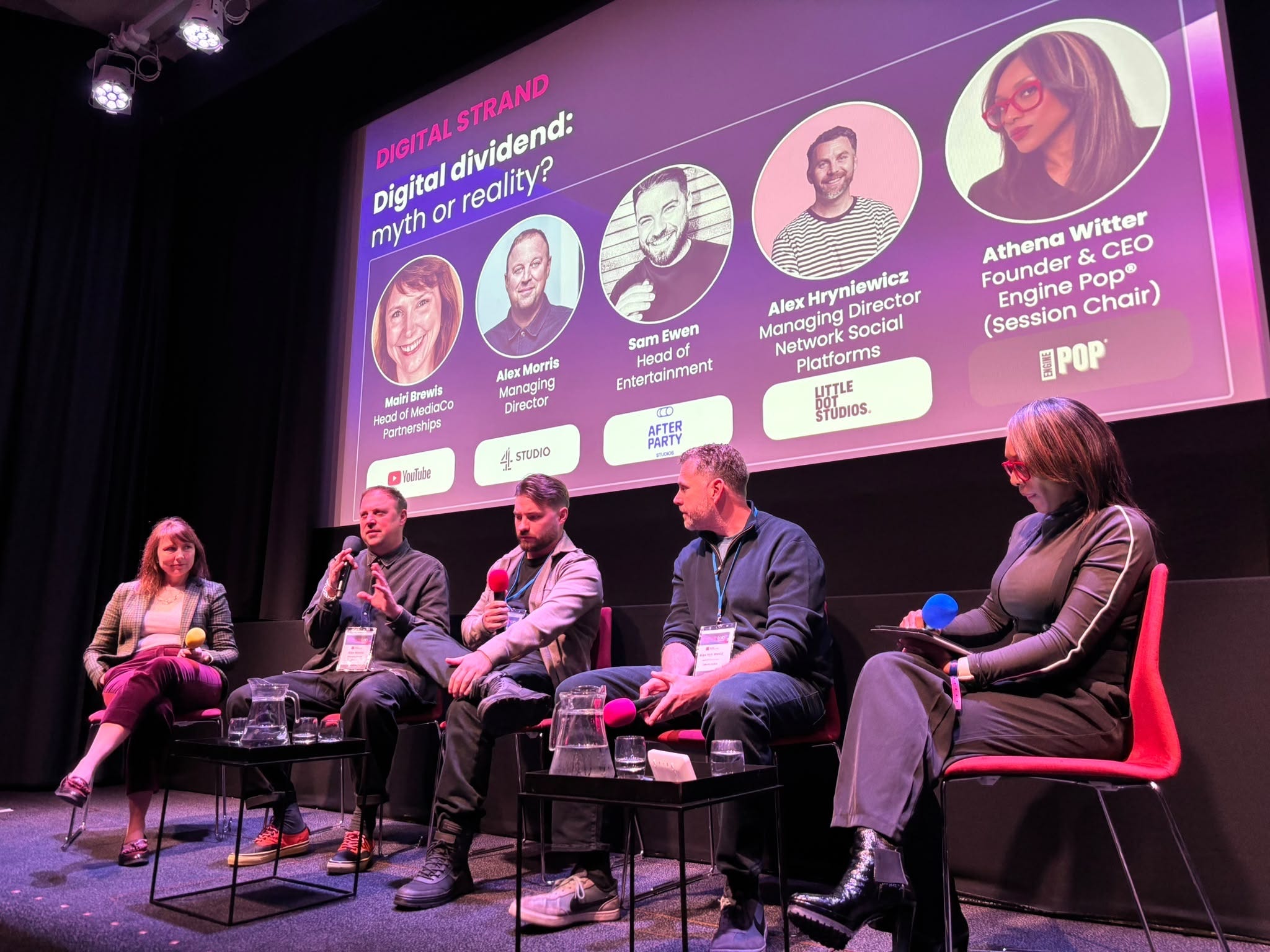
The continued importance of existing IP, direct relationships with fandoms and cross-platform distribution strategies took centre stage at Indielab’s GrowthLab London 2026 conference, which featured BBC Studios, Banijay, Goalhanger, Sky and more.
Panels on financing scripted series, the state of UK production, podcasting’s so-called “golden age” and the digital revolution revealed a climate in which enterprising executives and producers are working the angles to make the most of their content.
Read on for part one of our key takeaways from GrowthLab, featuring the sessions ‘Digital dividend: myth or reality?’, scripted panel ‘A nation of storytellers: protecting the UK’s global edge’, ‘Will podcast’s golden age last?’ and ‘View from the top: where next for UK production?’
Little Dot Studios: Forget Gen X and baby boomers at your peril
Audiences are missing a major opportunity by chasing only Gens Z and Alpha on platforms such as YouTube, according to Little Dot Studios’ Alex Hryniewicz, speaking on the ‘Digital dividend’ panel.
The managing director of network social platforms for Little Dot said the company runs channels where “the audience profile is completely inverted from what you would imagine,” and the single biggest audience block is over 65 years old.
“That has definitely been a journey that the platforms have been going on in the last few years,” said Hryniewicz. “The great thing is you don’t have to be thinking, ‘How do I appeal to that young demographic?’ Of course, there are opportunities there, but there are opportunities to engage a 40-plus, 50-plus, 60-plus audience on the platform as well. And quite honestly, I don’t think enough of us are actually thinking about those audiences.”
The session delved into the feasibility — and speed — of a digital pay-off. YouTube’s head of media co partnerships Mairi Brewis urged producers in the room to continue thinking of content on the platform as a “long-term investment.”
“For a lot of people, it’s quite a transition going from traditional TV to YouTube,” said Brewis. It requires dealing with “much more data, much more ‘test and learn’,” as well as the challenges of channel management and optimising thumbnails. Brewis encouraged companies to work with businesses such as Little Dot, who can help navigate the learning curve.
4 Studio managing director Alex Morris echoed the issue that “50% of the battle” is packaging content into appropriate thumbnails, captions, titles, comments, and the SEO into metadata. “These are all really, really key elements of what you might call a digital publishing ecosystem,” said Morris. “And more and more in the production world, those two spaces are crossing over.”
Takeaways: Single biggest audience block for some of Little Dot Studios’ channels on YouTube is 65-plus; YouTube advises producers to work with Little Dot-type companies to ease digital transition
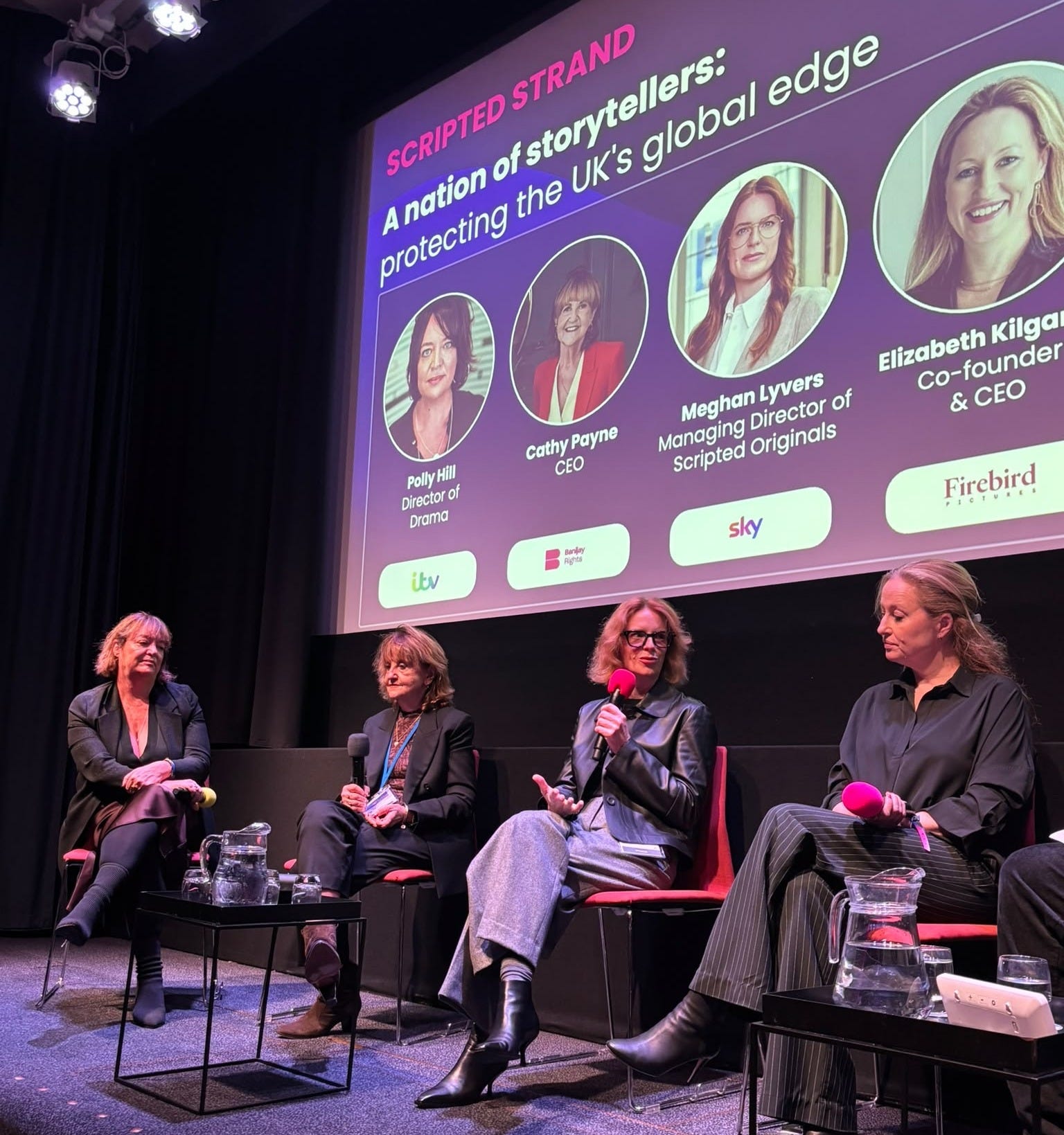
Drama producers call out inflated book rights market
In the post-COVID production boom, the market for hot literary properties was buzzing, with Monopoly money being thrown around on adaptation rights to the latest buzzy read.
But, as Firebird Pictures founder Elizabeth Kilgarriff explained during scripted panel “A nation of storytellers,” indies such as hers go for “much less IP now” unless it’s a “slam-dunk” idea or a means of getting the attention of a sought-after writer.
“Book options went crazy,” said Kilgarriff, who noted that 80% of her current slate is original and 20% is existing IP.
Sky’s managing director of scripted originals Meghan Lyvers underlined that book prices “need to come down” because, as it stands, they come at “massive cost” to drama producers, particularly if a show takes a long time to assemble.
“If a draft needs more time, then you are staring at another purchase price or re-auction period,” says Lyvers. “It is so expensive; it’s prohibitive to the producer. But also a lot of the deals that we’ve seen in the press in the last couple of years, at streamers or elsewhere, get opened up.”
Asked to elaborate by panel chair Krish Majumdar, CEO of I Am Ruth indie Me+You Productions, Lyvers explained that these book deals often get renegotiated “in cases where they are hugely expensive, because they do not make sense with finance plans for returning series.”
Banijay Rights CEO Cathy Payne noted that although the distributor’s shows such as SAS: Rogue Heroes and A Woman of Substance are both based on books, the vast majority of its scripted slate is not tied to existing book IP.
Similarly, ITV drama director Polly Hill said her greenlights weren’t contingent on whether an idea is based on a book, especially as she can’t necessarily offer the budgets that justify high option prices.
“I’m very aware that we have not got the biggest budgets, so we try and make shows that work for us,” said Hill. “We’re not trying to give producers an impossible task. So, if you’ve paid a huge amount of money, you’re probably not coming to us; you’re probably going to a streamer.”
Takeaways: book options went “crazy” in post-COVID boom and became financially unsustainable for producers; book IP isn’t necessary for drama greenlights at ITV
Goalhanger: “YouTube remains our greatest challenge”
Speaking on a panel interrogating the future of podcasting, Goalhanger co-CEO Tony Pastor said one of the company’s biggest concerns when launching The Rest Is Football podcast on YouTube was whether it would cannibalise the show’s community of listeners who engage with the show solely on audio. “That didn’t happen,” he said. “They’re entirely separate audiences.”
“Whenever I hear people say, ‘Should you really be doing video?’ This is not a debate to be had. That debate is well over,” said Pastor. “They’re two separate audiences. If you don’t want the other half of the audience that comes for the video part, that’s absolutely up to you. But you will halve your audience, so it’s insanity not to do it.”
However, the exec warned that monetisation on YouTube - which is Goalhanger’s fastest-growing distribution platform - is still lagging behind for the company.
YouTube comprises 27% of the consumption of Goalhanger’s long-form content, and is expected to reach 30% in early 2027 and north of 35% in late 2027. “Yet it’s also true to say that the monetisation has lagged behind,” said Pastor. “When I look at the proportion of consumption, it’s maybe 27% or 28%. But it’s definitely not 27% or 28% of our revenue.”
“Having said that, we are solving it,” he continued. “We now sell our brand partnerships, and our sponsorship, agnostically. So you buy 1,000 eyeballs or ears on The Rest Is History and that could be on Apple, Spotify or indeed on YouTube.”
But even so, Pastor said there is still “an awful lot of headroom” for even a show as established as The Rest Is History, which is Goalhanger’s biggest title worldwide.
“We’re selling out [advertising for] The Rest Is Football,” he said. “We’re not selling out The Rest Is History. So YouTube remains our biggest opportunity and our greatest challenge.”
Takeaways: video counterparts are important for Goalhanger podcasts; YouTube revenue isn’t keeping up with YouTube consumption for the company
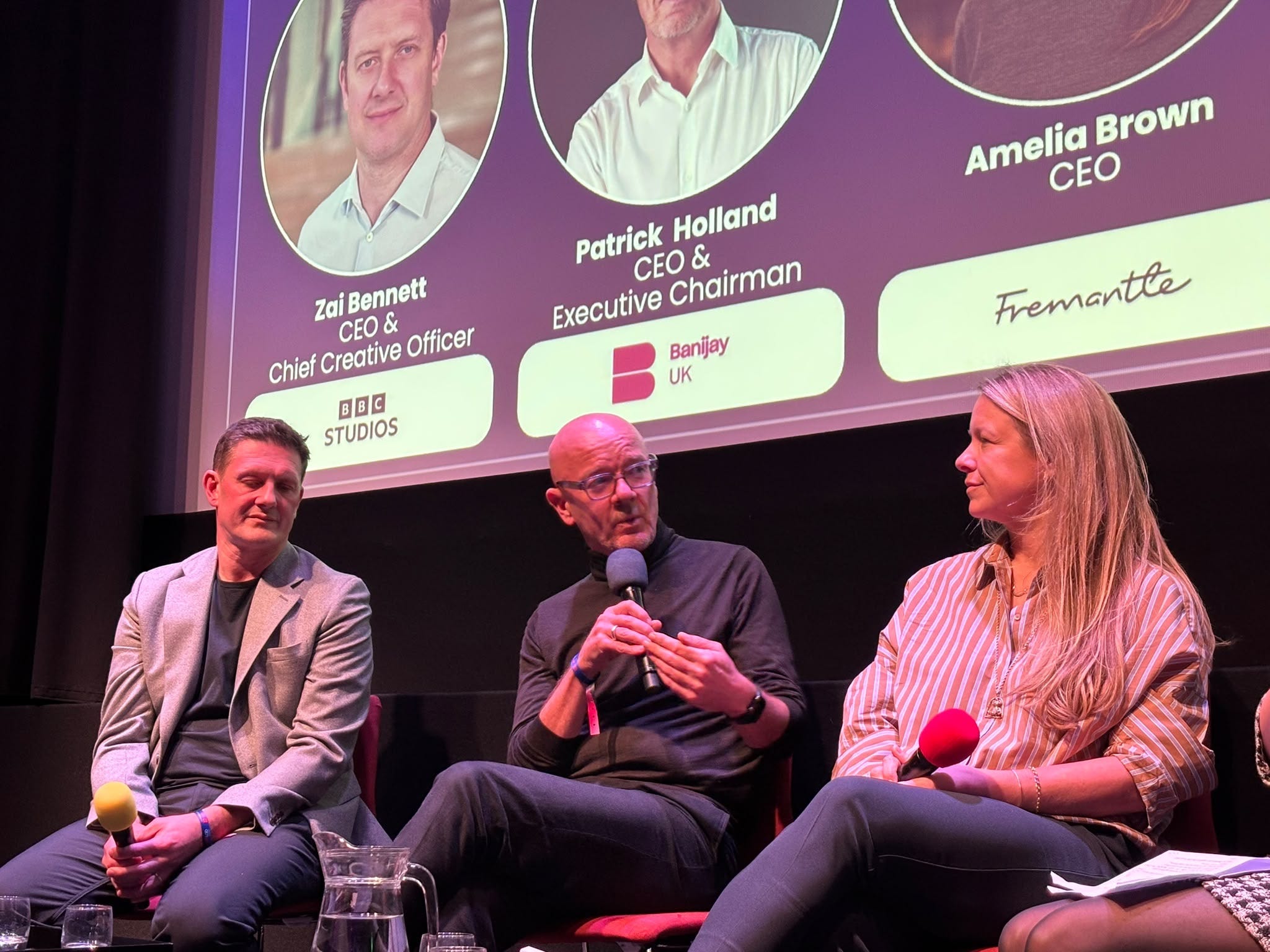
UK producers must hustle to build on existing IP
Production heavyweights from BBC Studios, Banijay and Fremantle convened in ‘View from the top: where next for UK production?’ to detail the digital avenues their companies have been tracking.
Banijay UK CEO Patrick Holland stressed that pursuing digital opportunities doesn’t mean forgetting about the “day job” of linear commissions and the traditional broadcasting model, but rather, monetising the archive and allowing it to drive new growth.
One stand-out example is the BBC renovation show Your Home Made Perfect, which Holland commissioned when he was BBC2 controller. The Banijay-produced programme ran for four series before it was cancelled in 2024. “It stopped working because it’s a closed-episode property format and they don’t work on iPlayer and those sorts of digital platforms,” explained Holland, who joined Banijay in 2022.
However, the show is very popular on social media platforms and, recognising this, Banijay has revived the brand into a podcast with one of the experts from the TV show, who advises on queries from home renovators.
“It’s using that IP that still resonates with certain members of the audience and building on it,” said Holland. “Maybe we bring the show back in some way.”
BBC Studios CEO Zai Bennett underlined that producers have to exploit their entire catalogue. “You want to make the most money that you can from all of the assets you hold,” he said. “Digital is a forward monetisation route.”
Bennett pointed to the three-year transformation of Dancing With the Stars in the US, which used to have an older audience but is now attracting a younger demographic thanks to a digital strategy that is “woven” throughout the programme.
“Everyone who participates in it has an incredible social platform presence,” said Bennett. “If you’re not famous and you come in, we put you with a dancer who does [social media]. We make sure there are strategists for each of those individuals. There are TikTok lives over the breaks. There’s tonnes of stuff that happens throughout that show throughout the week.”
Takeaways: producers must make digital money from all the assets they have - but don’t forget the day job; canceled Banijay home reno show now a podcast
Hiring? We feature paid job listings, to book a listing, email hello@theindiehustle.com
Sponsorship? If your organisation would like to find out about sponsorship and advertising opportunities, email hello@theindiehustle.com