


When I was asked to come up with my top predictions for 2026, my head went straight to the moment in 1996 when I confidently predicted that the Fresh Prince of Bel Air would be the next president of the US.
Through my work with BBC News analysis editor Ros Atkins, I’ve had to accept that whilst predictions plucked out of thin air are entertaining, they aren’t great indicators of future trends.
So, much as I’d like to make a Hail Mary call on how Stranger Things will finally end, I’ll base my predictions for 2026 on factual analysis, rather than vibes.
They are:
The digital economy: with prominence comes scrutiny
Accelerated consolidation for UK and international broadcasters
Production companies self-fund going direct to consumer
Personal brands and creator core matter more than ever
AI reshapes both process and creativity
Consolidation in the international and UK broadcast sector will accelerate in 2026
Talk and rumour of strategic consolidation went public in 2025, and the next phase of our industry’s evolution will involve a significant reshaping of both UK and international broadcaster structures.
Increasing commercial pressure and market forces resulted in all broadcasters except Channel 5 decreasing their investment in new programming last year. According to the latest Pact Census, ITV alone spent £84 million less on new programming in 2024
In a fragmented global market and a weakening ad economy, major media groups are being pushed toward drastic measures to stay profitable. At the same time, larger groups will attempt to seize opportunities for share and scale in order to compete with global giants.
The recent coverage of Sky’s reported interest in ITV is a case in point, and Netflix having swooped to acquire Warner Bros Discovery in a £54billion deal underlines how aggressively global players are repositioning.
What is startling is how quickly these deals might come to fruition. The often referenced Project Kangaroo took 2 years to build before being blocked by the UK’s Competition Commission on the grounds that it would “restrict competition from other current and future providers of video on-demand services to UK viewers”.
Reports estimate that Sky buying ITV would result in their share of the ad market reaching 70%, which would certainly have forced regulators to act in the past.
Perhaps that’s less likely now; a sign that is entirely reflective of what’s at stake in the domestic TV market today.
The “current and future providers” identified by the UK Competition Commission nearly 20 years ago are most certainly competing today, and I expect action to be fast.
Let’s be pragmatic consolidation rarely means increased commissioning opportunity, but as we well know, broadcasters are no longer the only route to market.
Production companies will self-fund projects and go direct to consumer
One data point that absolutely floored me is the Media Reform Coalition’s finding that just 12 large indies account for nearly half of all commissioning value from UK broadcasters.
For an industry with hundreds of production companies, that level of concentration has a profound effect on the broadcast economy.
It also explains why so many agile producers are now turning to self-funding and direct-to-consumer models as a way to prove market value without waiting for a shrinking pool of traditional commissioning slots.
We’ve all seen a noticeable shift in the ambitions of production companies, both established and newly launched, towards digital-first thinking. This is not viewing YouTube or TikTok as an “additional revenue stream”; it is a strategic realignment.
The break-up of legacy indies and the departure of senior creative leaders has accelerated the formation of new, digitally-minded outfits. These companies are leaner, more entrepreneurial, and often better positioned to operate across both traditional and platform-native ecosystems.
Companies are building business plans around digital commissioning, audience ownership, and the ability to monetise IP beyond UK broadcast windows.
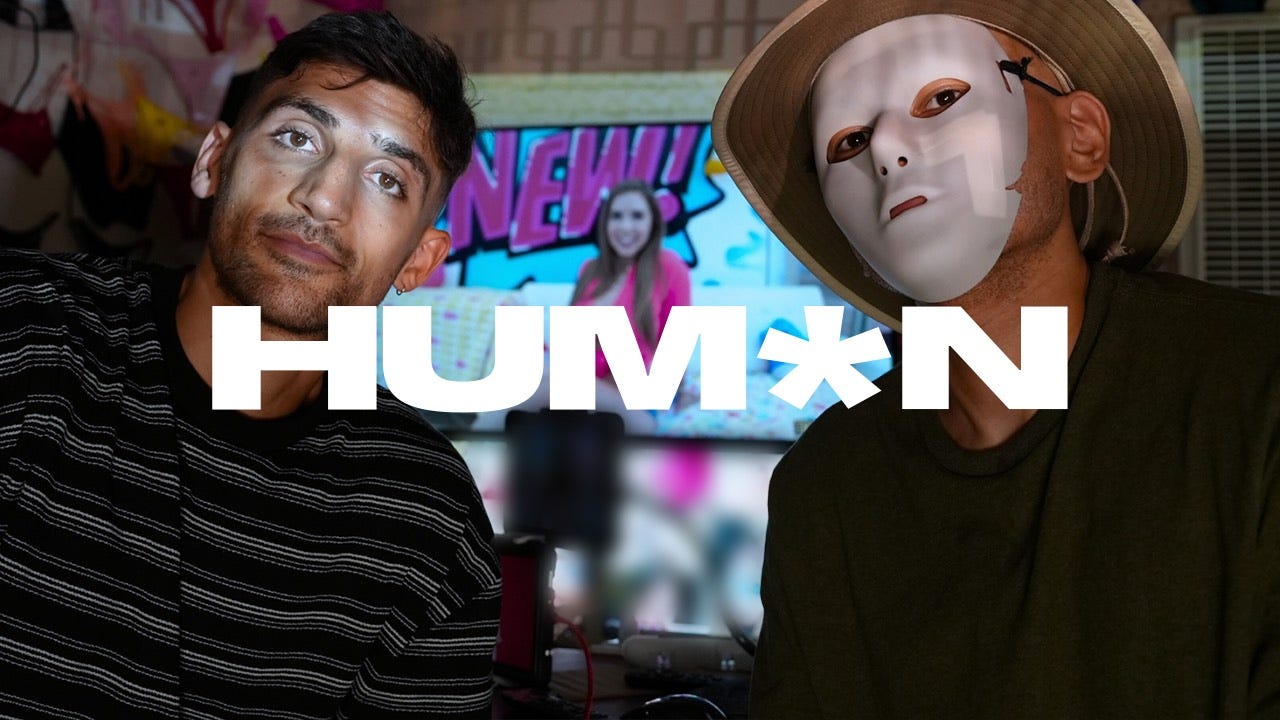
Ben Zand’s brilliant series Human is an important case study. Ben’s long-form journalism on YouTube demonstrates that high-calibre documentary storytelling can reach audiences directly without compromising on access, rigour, or production quality.
The minute-for-minute value is comparable to Ben’s broadcast output, but it’s the bang for buck where this series is really breaking new ground. For Ben the move into direct-to-consumer isn’t just a response to the commissioning landscape, it’s a deliberate creative choice.
The critical word on everyone’s lips is “revenue”.
Will a sizeable enough audience seek out this level of premium factual content on digital platforms for Zandland to make this a commercially viable business model?
As we all know, video-sharing platforms rarely pay off instantly - but just how long can the long game be?
The digital economy: With prominence comes scrutiny
According to Advanced Television, UK digital commissioning reached its highest ever share of domestic commissioning revenue in 2024, at 8.9%.
However, look beyond the hype for the real story.
For most creators, the digital economy remains extremely challenging. Only a small cohort of macro-creators see meaningful commercial returns; the median income - not the headline-grabbing average - still reflects inconsistent monetisation, demanding schedules and earnings that rarely match traditional TV rates.
A CITI GPS report on the creator economy finds that creator income is very concentrated. Over 90% of YouTube subscriptions come from less than 5% of the channels. This episode of Untold made by AfterParty Studios is well worth a watch.
For mid-tier freelancers in the process of pivoting, the financial volatility remains prohibitive. The type of work may reflect broadcast output, but the hours and pay often do not.
For freelancers, the shift is even more personal. A “creator mindset” is no longer optional. Building a personal brand, nurturing a platform and understanding how to grow and engage an audience may soon sit alongside broadcast credits as core professional tools.
In a world where discovery is algorithmic, it’s worth remembering that in 2026 visibility is a form of currency.
Personal brands and the creator core
In 2026, whether you’re a production company or a freelance creative, your personal brand will matter more than ever.
As commissioning opportunities face increasing scrutiny and AI forms a new creative baseline, what sets you apart is knowing who you are and what you uniquely bring.
This is about developing a reputation, being an early adopter, adding value to your employers and finding your voice. Then packaging all that as part of what you offer across content, IP and a point of view.
I think the market will value:
Entrepreneurial creators who understand how to package rights, engage audiences and build across platforms.
Indies with distinct slate identities whose teams can articulate not only what they produce, but why it matters.
Hybrid professionals who combine traditional production skills with a creator mindset - able to go from pitching to production to audience growth.
For freelancers, this means building your digital presence now; we are living in an online marketplace and we all have to stand out.
Yes, I hate to say it, but we all need a creator core now.
AI reshapes both process and creativity
By 2026, AI will no longer be an optional tool; it will be woven into the foundations of production.
We know AI-powered tools will be part of our everyday lives, streamlining workflows and speeding up repetitive tasks and production cycles, but it will also have a huge role to play in creative structure.
Whether that’s briefs, decks, rough cuts, marketing or promotion, AI will provide an instant and solid foundation for us to do the irreplaceable creative work.
You’ll never need to stare at a blank page again - but that doesn’t automatically make a great book.
What we offer as creatives will have to go beyond structural expertise, and authorship is where we will make ourselves indispensable.
AI is here. Next year it’s time to embrace it, harness it and define and demonstrate your distinctive creativity.
And if you made it this far, here’s a bonus, plucked-out-of-thin-air prediction for 2026: knighthoods for Vic Reeves and Bob Mortimer.