


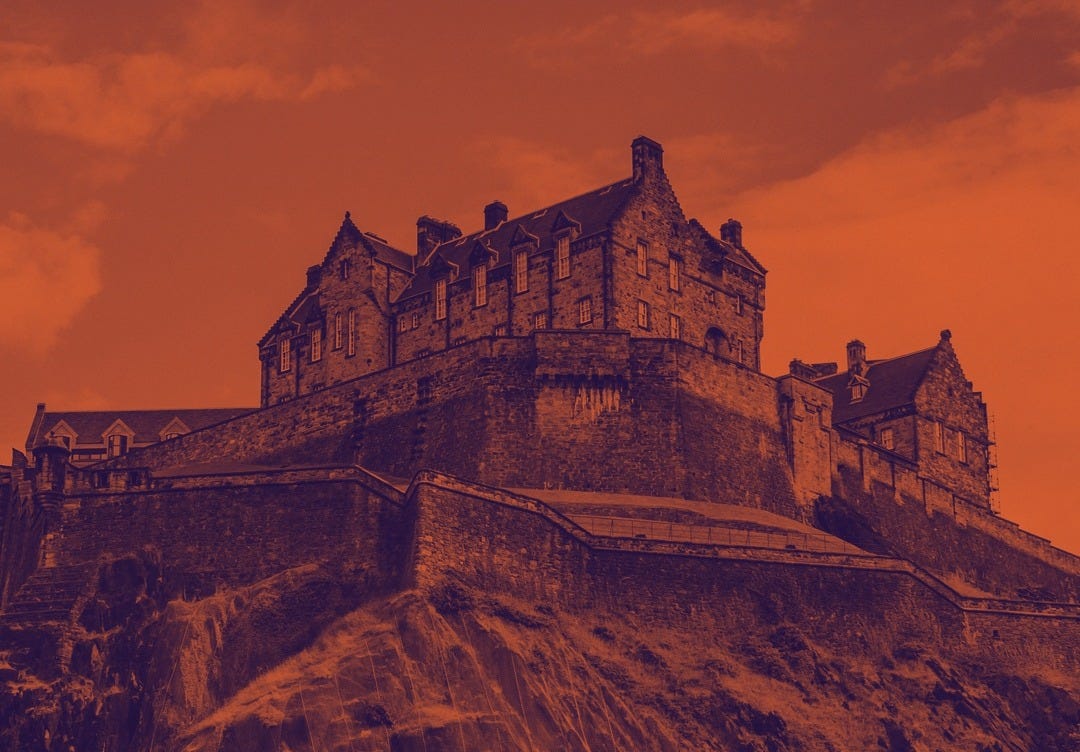
Beginning to think about what to pack for the Edinburgh TV Festival? What meetings to set up, who you might bump into and what sessions to attend?
Yes, the countdown has begun to the last TV Festival in the Scottish capital as the TV Foundation’s historic event moves to Manchester next year.
So this week we’re looking back to the future, with some learnings you can take forward from the highlights and recollections about the festival that took root with the inaugural James MacTaggart lecture in 1976.
That was simply a retrospective given by radical playwright John McGrath at the Edinburgh Film Festival about the work of the recently deceased TV producer MacTaggart.
But it sparked a debate about television that led to the establishment of the TV Festival the following year by then producer of Granada’s World in Action Gus (now Lord) MacDonald and the heads of Scottish Television and BBC Scotland.
MacDonald described it as a “wee gabfest” for a “wee handful” of programme-makers, where they “would be allowed to speak freely because their bosses wouldn’t be there”. But over the years the executives began attending because, as MacDonald said at the time, people were asking “huge questions, but there is no one here to answer them”. So it became an event during which “any researcher can just walk in and pick a fight with the director general”.
Former PACT chief executive John McVay recalls that did indeed happen one year: “I remember being in an audience and some freelancer asked [former BBC director general] John Birt this fantastic question and John Birt didn’t like it, and I was like, “That’s amazing. This is the boss of the BBC being taken to task by some sound engineer or whatever and I thought, ‘This is really interesting’.”
Over the last five decades Edinburgh has been the backdrop to key points in the history of indies: from lobbying for better terms of trade to the announcement that opened up huge parts of the BBC schedule to competition, and from programme ideas pitched in loos to the creation of production companies following boozy nights in The George Hotel’s bar; Edinburgh has seen it all.
So what can the festival’s past teach us about the future of the industry? And what have been the highs and the lows? To find out we’ve spoken to former Edinburgh TV Festival board directors Alan Clements and John Willis, ex-Festival CEO and director Lisa Campbell, Wall to Wall co-founder Alex Graham, Avalon co-founder Jon Thoday and ex-PACT chief executive John McVay.
Read on to learn:
How to use Edinburgh TV Festival to your advantage
Ways the festival has been a crucible for the creation of indies and ideas
How Edinburgh can act as a barometer and catalyst
What to learn from the best and worst MacTaggart speeches
Edinburgh’s funniest moments and highlights

Using Edinburgh TV Festival to your advantage
There are many TV conferences nowadays but the word festival in Edinburgh’s title has been key, with the industry using it as a time to come together, celebrate and, crucially, debate the topics of the day.
Former festival board member and ex-Mentorn and Tinopolis boss John Willis explains that “it’s been a great institution because what it’s done has been a meeting point for all independent producers and at the same time the broadcasters and commissioners have also attended.
“So it’s one of the places - even if it was 2am in The George Hotel bar - where there was a direct contact, which is not easy through all the layers that sit between independent producers and the decision-makers inside broadcasters or streamers.
“It’s been a really important place for meeting and also lots of issues about the future of broadcasting have been aired. It’s a place to take the temperature really of where things are. Our industry has continuously evolved, changed and shifted, and Edinburgh is a good place to actually [discuss] ‘This is what might happen next’ and…provide a more direct relationship between commissioners and producers.”
It’s also been an event where “actual business things have happened”, says former festival board director and Two Rivers managing director Alan Clements. He and his wife Kirsty Wark hold a dinner each year and “for me it’s the most important thing we do as a company; it brings people together [as] what is always incredible to me is how many people in the industry don’t know other people in the industry…So [we] have somebody from Disney meeting somebody from Amazon meeting somebody from Channel 5.”
He points out that things have shifted away from The George bar since the hotel was refurbished and the industry has become more corporate with some streamer bosses now keeping more to themselves, but it still has a “democratic spirit” that provides you with a chance to “meet people that you’ve never met” in a way “that doesn’t happen” at some conferences.
Former PACT chief executive John McVay recalls a key draw for indies over the years was, the controllers and commissioners, “didn’t run away and hide with private dinners. It was much more egalitarian and much more accessible and porous and exciting because of that.”
But there still remains, “the serendipity; you never know who you’re going to bump into in a queue” and he has seen, “people pitching shows in toilets…I don’t know how welcome it is or if it actually works, but I’ve seen people do it at Edinburgh many times. And why not? Seize the moment.”
The festival can also provide a reality check. Who Do You Think You Are? creator Alex Graham points to a session by Troubleshooter presenter and businessman Sir John Harvey-Jones, in which he analysed three production companies and their finances and then, “famously excoriated indies for being ‘a lifestyle, not a business’, a phrase that entered the TV vocabulary and never left. I sat in the audience quietly congratulating myself for having dodged that particular bullet.”
Takeaways: look at the delegate list to decide who you want to target in session queues; seize the moment to introduce yourself to commissioners you don’t know; what can you learn as a business from the talks on offer
A crucible for the creation of indies and ideas
Many a collaboration and programme has been dreamt up at the festival. Clements recalls: “I watched Catchphrase being reborn over a whisky.”
He was at STV at the time with Liam Hamilton and they were having a drink with Jeremy Fox from DRG, who had the rights to Catchphrase.
“We were sitting having a late night whisky, and we went, ‘We should bring that back’. [Jeremy said] the family wanted to do a deal with ITV Studios, and I was like, ‘Don’t do that, do it with us!’ and that grew out of Edinburgh.”
The festival also provided a portent to one of the most successful companies, Clarkson’s Farm producer Expectation, founded by Tim Hincks and Peter Fincham.
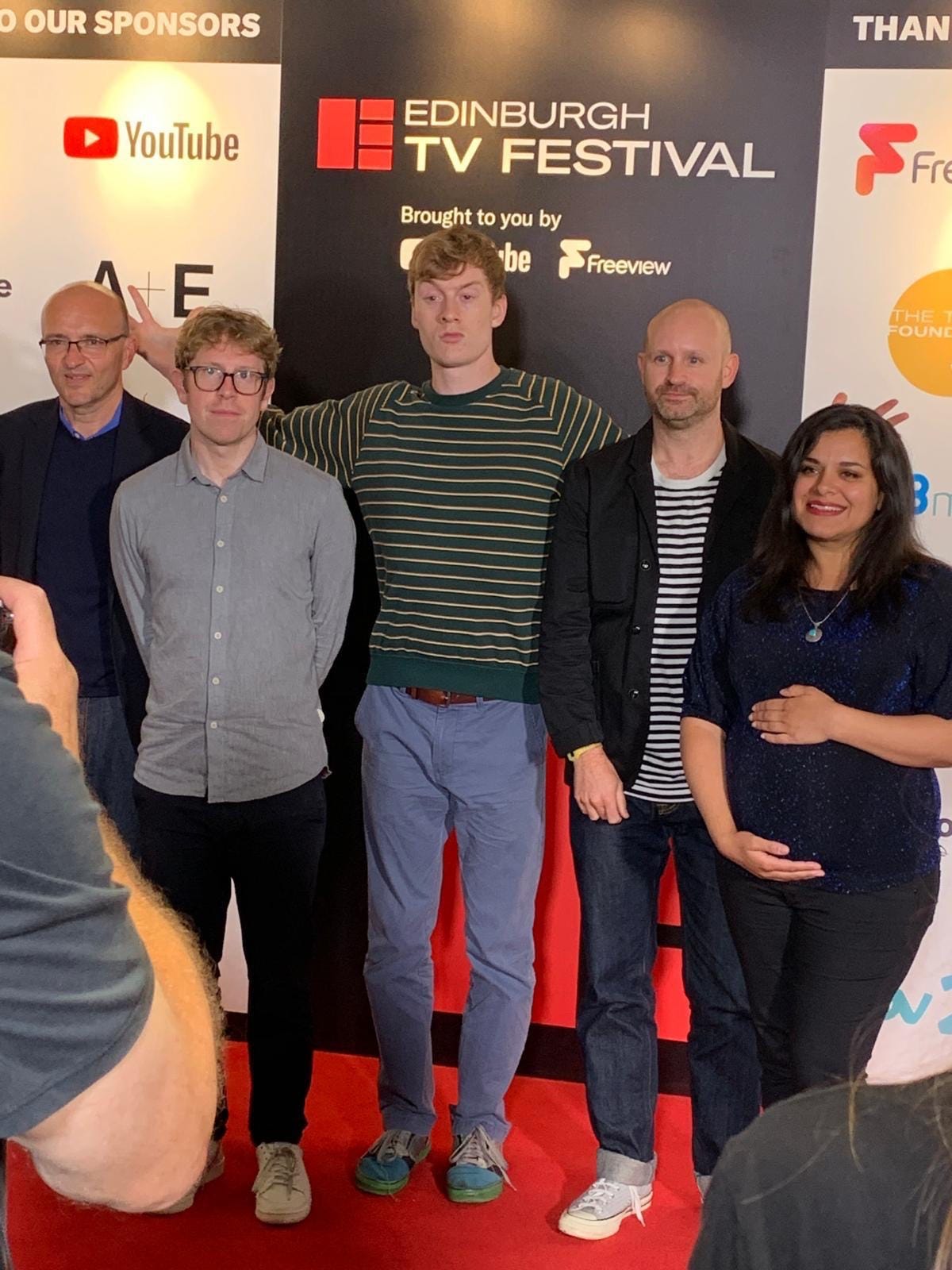
In 2009 the pair (then at Endemol and ITV, respectively) played in a band called the Overnights for a contest at the festival called TV’s Got Talent. Hincks (who was chairing the festival’s executive committee) was on guitar, with Fincham on keyboards. It was so well-received the following year the pair returned to perform in The George with their new band No Expectation.
Footage from the show may be grainy but I can personally vouch they went down a storm. They subsequently played at Mipcom and Latitude so in 2017 it was no surprise when the pair started up a company together and called it a more optimistic version of their band name, Expectation.
Speaking from Edinburgh where he is watching talent at the main Festival and Fringe Thoday points out how the TV Festival has benefitted from being part of the wider global entertainment industry’s focus on the Scottish capital and thinks it is "a shame" it is moving to Manchester. “There are television executives from all over the world coming to Edinburgh today to try and find talent…and there are independent producers here all the time.
He concludes: “If the TV Festival hadn’t been in Edinburgh, I don’t think Taskmaster would have happened because that was how I got the executives to go and see it [when they were in town anyway for the TV festival].”
Takeaways: accept that invitation to drinks; future business relationships can be forged in the festival fire; TV is part of the UK entertainment eco-system
Edinburgh as a barometer and catalyst
You never know what’s round the corner at the festival, as the then BBC director general Greg Dyke showed in 2000 when Edinburgh was agog with the announcement he was moving the corporation’s 9pm news bulletin to 10pm to fill the slot left empty after ITV axed News at Ten.
Last year Channel 4 hit home against the issue of the rise of the streamers by coining the term “TV tourists” to describe Netflix’s commissioning of Adolescence.
Sometimes history repeats itself. Over two decades after they were hotly debated at Edinburgh before coming into force through the 2003 Communications Act, broadcasters’ Terms of Trade are a talking point again this year following the industry consolidation that has led to the creation of mega-indies such as Banijay and All3Media. Clements says that another “big turning point” for indies was when the BBC announced in 2014 it was opening all the corporation’s schedules up to competition and, in return, creating BBC Studios.
Director of television Danny Cohen was the focus of that year’s Edinburgh as he laid out which shows would not be up for grabs - such as Strictly Come Dancing and EastEnders - indicating to producers those on offer.
Clements says: “I remember even PACT members going, “Well, I wouldn’t have done that because you own…Casualty or whatever. Why would you put that up for tender? I don’t think even PACT were particularly pushing for that.”
Ex-festival CEO, now BAFTA programme director, Campbell points out that Michaela Coel’s historic 2018 MacTaggart lecture “was a watershed moment in British TV”. Praising its “raw, deeply personal approach, disclosing for the first time that she had been sexually assaulted during a production”, Campbell thinks Coel’s “bold exposure of on-set racial inequalities and exploitative business models that strip young, diverse creators of their IP, acted as an immediate catalyst, triggering structural reforms across major UK broadcasters. Intimacy coordinators became mandatory alongside independent reporting lines for bullying and new duty of care proposals around trauma.”
It also “upturned traditional power structures, prompting broadcasters to abandon total copyright acquisition models - a shift that allowed Coel to retain 100% of the rights to her groundbreaking series I May Destroy You.”
Takeaways: think about what topics are vital for your business as the festival can be a useful lobbying occasion; tap into the trends that emerge from the sessions; fundamental systemic change can be sparked at Edinburgh
Learnings from the best and worst MacTaggarts
The fascination with the Murdoch family and its impact on the industry has loomed large at Edinburgh.
In 1989 Rupert Murdoch lambasted the BBC licence fee and twenty years later his son James’s MacTaggart echoed that as the then News Corporation Europe and Asia chief said, “the BBC is incapable of distinguishing between what is good for it and what is good for the country...The scope of its activities and ambitions is chilling”.
He added that “the only reliable, durable and perpetual guarantor of independence is profit”. A line that in 2012, his sister Shine chief Elisabeth Murdoch countered in her MacTaggart with the line: “Profit without purpose is a recipe for disaster”.
Willis says the Murdochs’ MacTaggarts were significant because, “they were such major players in Britain. To hear them publicly outline their views and perspectives, because otherwise we were all guessing…was pretty significant.”
Clements remembers thinking during James’s: “Something has changed here because before that at the festival, there was always criticism of the BBC…but it was like, ‘You should do more arts programmes or make more programmes outside of London. But it was done in the spirit of friendly support.
“That was the first time I remember there being an absolute out-and-out assault and because it was done so calmly, but with such suppressed anger about Sky being stopped from monetising its news websites because of the BBC’s creep onto the internet, it was extraordinary and was so out of kilter of [the usual] Edinburgh.”
“It was never as bitter, angry or as pointed as that…and you’ve seen that in the TV business since then that it’s become much more commercial.”
David Abraham (then Channel 4 chief executive) is lauded by some indies for presciently saying in his lecture: “[The UK’s independent production sector is] being snapped up almost wholesale by global media companies at a faster rate than tickets for the public execution of Jeremy Clarkson”.
But for Campbell two MacTaggarts stand out in particular, Coel’s (mentioned above) and Dorothy Byrne’s in 2019, “whose speech not only marked the first time a prop was used in a MacTaggart lecture as the former C4 exec held aloft a large - and if you were close enough, stinking herring – whilst simultaneously calling out politicians for their lies.
“Byrne also blazed a trail by talking about the last great taboo – the menopause – which saw the introduction of a menopause policy at Channel 4, subsequently adopted more widely.”
Many think Vice CEO’s Shane Smith’s 2016 MacTaggart was something of a nadir. McVay recalls he, “just rambled in front of a whole lot of people who really didn’t want to be there” and represented, “all the sort of naysayers or future-gazers that came along and say, ‘Oh, you’re all dinosaurs’ - that’s all happening now with YouTube and with content creators and influencers. It’s all about that now. And I go, ‘Well, is it?’. Unless they’re mega, mega-successful, most of them aren’t making any frigging money!”
Takeaways: MacTaggarts can create new strategies as well as headlines; look beyond the headlines for emerging themes
Funniest moments
“You know what they say, what happens in Edinburgh, stays in Edinburgh”, jokes Campbell whose most enjoyable memories include “Edinburgh does…LipSync Battle’, with singer Mel B judging some quite questionable lycra-clad performances” and “Edinburgh does…Big Brother, where we locked eight execs in the Big Brother house for 24 hours” and mimicked the show’s regular brutal tasks by subjecting them to a quiz in which “we administered an electric shock for every wrong answer. Watching TV bosses clad in forgiving lycra jumpsuits jolting painfully in the air proved a strange delight for all of us!”
Humorous anecdotes from long-term attendees range from Channel 4’s PR team trying to ensure their chief exec Mark Thompson’s appearance sporting a new beard to deliver his 2002 MacTaggart didn’t overshadow his actual speech, to Sir John Birt surprising onlookers by hitting the dance floor at the C4 x Soho House pop-up in 2005.
A highlight is always when execs and producers take part in versions of TV formats such as The Apprentice and talent shows.
“I had to wait nearly twenty years for my big moment” at Edinburgh says Graham, which was not a MacTaggart but an appearance in the festival’s “live re-boot of Stars In Their Eyes, hosted by Vernon Kay. (‘Tonight, Vernon, I am going to be Joe Cocker’) Singing With A Little Help From My Friends. Never in my life have I been so terrified. But I’m pleased to say, with the help of Granada TV’s brilliant Ray Monk I saw off a strong field, including Newsnight editor Peter Barron’s Elvis Costello and Sky One controller Richard Woolfe’s Freddie Mercury. The Guardian was kinder to me than Richard, who, they said, ‘dressed up as Freddie Mercury but looked more like Catherine Tate’.”
He also recalls “The George bar was always an intimidating place for an ambitious young producer” but his career “nearly ended before it started when my two-year-old daughter, who had come along with her mum, reached out and stuck a chubby hand into John Birt’s gin and tonic, pulling out the slice of lemon and sticking it in her mouth. It was to be her last visit to the Festival.”
Among Clements’ fondest memories are an executive of German network ProSieben observing to Nicola Sturgeon, “Do you know you look a bit like Nicola Sturgeon?” and So TV chief Graham Stuart bonding with Jerry Springer at the end of a long night singing Scottish folk song Bonnie Dundee.
A favourite recollection of Thoday’s is when he was asked to be on an Edinburgh panel about talent after the corporation said it would not do business with Avalon for five years following client Frank Skinner’s move from the BBC to ITV.
“I was talking to the [BBC controller of talent] Rob Warr in The George bar the night before. I said, ‘We’re on different sides of a panel tomorrow and we’re talking about talent’. He said, ‘Oh yes, I hope it’s not going to be contentious’. I said, ‘Well, it is going to be contentious.’”
The following day Thoday arrived, “for the panel, excited about the fact we could debate this in public and Rob had gone to the organisers and he wasn’t prepared to be on the other side to me!”
In the days when most execs stayed at The George Hotel, an incident that stands out in Willis’ mind was “a fire alarm at about 3am and the glitterati of British television in their pyjamas on the pavement outside. And there were quite a lot of people looking around saying, ‘Oh, what are they doing standing on the pavement together?’”
Takeaways: the most memorable moments are often unexpected; it’s business but enjoy it too
Hiring? We feature paid job listings, to book a listing, email hello@theindiehustle.com
Sponsorship? If your organisation would like to find out about sponsorship and advertising opportunities, email hello@theindiehustle.com

I’ve got to go to this one. Bucket list. I work in and write about film. I subbed you